EDUCATION
Students read aloud. AI scores them
State-mandated testing program helps track progress but sparks concerns over inconsistent data and student frustration



Published
Lilly Garcia is learning to read. Her tutor is a robot.
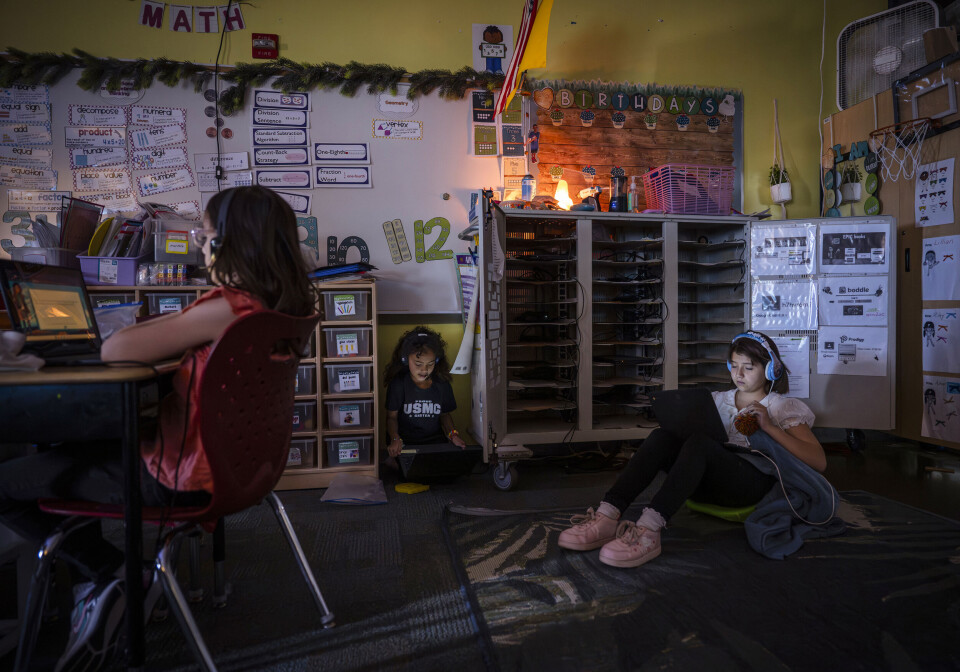
On a Friday morning in her combination second- and third-grade class at Matheson Park Elementary School, Garcia reads a story about a rabbit and a fox traveling to a tropical island. She鈥檚 wearing a headset linked to a laptop running a program called Amira, an artificial intelligence-based learning software.
Amira works by listening to students read a sentence out loud and catching their mistakes. If a student mispronounces a word, a video of a human mouth appears on screen, repeating its correct pronunciation 鈥� 鈥渙pposite,鈥� 鈥渞eplied,鈥� 鈥渁dmired鈥� 鈥� and the student replicates it into the microphone for points.
A bespectacled cartoon girl with purple hair 鈥� this is Amira 鈥� sometimes pops in to ask students a question about the text: 鈥淲hat does the author mean by, 鈥楾he wind is angry today?鈥欌��
Beginning this school year, the state of New Mexico is requiring all students in kindergarten through second grade at public schools and public charter schools to take reading assessments on Amira. Its use is approved up to grade eight. The program grades students鈥� progress in a numbered score used to measure school and district performance.
The New Mexico Public Education Department began using Amira after the software provider that schools had been using for testing, Istation, was by the San Francisco-based company Amira Learning.
Amira is required for assessments in two states 鈥� New Mexico and Idaho 鈥� and is authorized for state use in Oklahoma, Georgia, California, Texas, Michigan and Massachusetts.
Some schools, like Matheson Park, a small elementary school in Northeast Albuquerque, have warmed to Amira. Teachers use it to monitor reading level progress at the beginning of each month, said Principal Jacqueline Lovato.
Matheson Park is an Amira success story 鈥� since the beginning of the year, reading scores in Lilly Garcia鈥檚 class are up nearly 30%, according to Amira data provided to the Journal.
鈥淚 haven鈥檛 heard any complaints from my teachers,鈥� Lovato said. 鈥淚 think the kids have gotten more comfortable.鈥�
The PED recommends 30 minutes of Amira tutoring per week for students in need of reading intervention, according to department officials.
While official data from Amira and state agencies like the PED report the program grades with the same as human scorers, teachers told the Journal there are discrepancies between Amira鈥檚 scores and a student's actual abilities.
Some teachers and staff at Albuquerque Public Schools say the program is inaccurate and cumbersome. Reported problems typically fall into two categories: speech and dialect variability and environmental and technical interference.
Amira sometimes does not recognize voices of students with speech disabilities or foreign accents, teachers said. These students still must use the program for assessments.
And in busy classrooms, teachers say the AI picks up background noise and voices of other students, leading to inaccurate results.
In Celeste Hernandez鈥檚 kindergarten class at Bel-Air Elementary School in Northeast Albuquerque, Amira can be finicky and challenging, she said.
Hernandez has seven students on individualized education programs, or IEPs, for speech 鈥� meaning they have a disability accommodation 鈥� and eight who are learning English.
When used by these students, Amira has trouble recognizing their words, she said.
鈥淚t鈥檚 not always great at picking up the language of students, especially when they have trouble with (spoken) language,鈥� Hernandez said.
Some students with speech disabilities are difficult to understand, even for teachers, Hernandez said, and the program will make them repeat words again and again until they鈥檙e exasperated.
鈥淭hey鈥檙e doing the best they can,鈥� she said. 鈥淏ut I mean, there鈥檚 a point of frustration where it鈥檚 like, why are we doing this? You can just see it in kids 鈥� they just are defeated.鈥�
As is true in most cases, before there were computers for conducting reading assessments, there were humans. Hernandez remembers when teachers would sit down with kids one-on-one to gauge their reading progress.
鈥淒id it take a long time? Absolutely,鈥� she said. 鈥淏ut I could tell you where every kid was all the time.鈥�
In Ryan Hayes鈥� special education classroom at Chaparral Elementary School on Albuquerque鈥檚 West Side, about half of his students are adept at using Amira, he said. For these students, the program can provide a good representation of their abilities. For the rest, using Amira is difficult.
鈥淭he problem with any online platform in any setting 鈥� you鈥檙e going to have some students that are successful with it. You have some students that are not successful with it,鈥� he said.
Some of his students have trouble processing directions. Hayes said he sometimes has to repeat instructions to them five to eight times. When Amira asks these students to read a sentence only once or twice, they鈥檙e not able to understand, he said.
鈥淚f you have a kid with social communication deficits, like the type of kiddos we work with in here 鈥� with receptive, expressive and articulation delays 鈥� I feel like there should be an opt-out,鈥� he said.
Amira does have disability accommodations 鈥� the program has modifications for one of Hayes鈥� students who can鈥檛 speak, but the student鈥檚 short attention span means she frequently needs to be redirected to the test.
鈥淲hen you have her do it a couple of times, she escalates and starts screaming and shouting,鈥� Hayes said. 鈥淚t dysregulates everybody in the classroom. They鈥檙e more focused on that behavior, and then their scores also plummet a little.鈥�
Having to battle students once a week takes up precious instructional time, Hayes said.
鈥淭uesday鈥檚 actually our Amira day. Today, I鈥檒l bring them in and they will start groaning. I have a couple of kids 鈥� they鈥檒l start crying because they have to do it today,鈥� he said.
Teachers are able to look at the data after assessments are complete, though sometimes, school staff say they find inconsistencies.
鈥淚 would say there are inaccurate scores more often than not,鈥� Hernandez said.
Erik Johns is a teaching and learning coach at APS whose job it is to track and interpret student assessment data. The data Johns sees from Amira, he said, is often inconsistent.
鈥淚鈥檓 seeing in the data these massive fluctuations month to month in children,鈥� Johns said. 鈥淪tatistically, when you鈥檙e looking at percentile rankings, if you see a kid fluctuate one to two points, that鈥檚 normal. Fluctuating 20 or 30 points every month is totally abnormal. And it鈥檚 primarily because the AI is not working correctly.鈥�
Inaccurate data provides an inconsistent look into student progress, Johns said, which means it鈥檚 difficult to know how to help students who are struggling.
Teachers, too, are being judged on data that may not be an accurate assessment of their students, he said.
鈥淚 have some really, really excellent teachers here, especially in my lower grade levels, and they鈥檙e being judged on this data that鈥檚 completely inaccurate,鈥� Johns said. 鈥淚t鈥檚 not factual, and it鈥檚 heartbreaking, because they鈥檙e working very, very hard to do the very best by our students.鈥�
Since the program is a new state requirement, an adjustment period is expected, PED spokesperson Janelle Garcia said.
鈥淭he PED has been working with Amira to provide ongoing training and to support students who speak other languages or who have disabilities impacting speech,鈥� she said. 鈥淚n addition, a range of protections are built into the program to ensure that Amira鈥檚 mastery evaluations are not impacted by accent or unusual speech pattern.鈥�
The department acknowledges that the program is not suitable for students with the most significant cognitive disabilities.
鈥淧ED defers to students鈥� IEP teams to determine the most appropriate assessment approach for these students,鈥� Garcia said.
At APS, 31,267 students have read 2.5 million minutes on Amira so far in the 2025-26 school year, according to Chris Blevins, Amira鈥檚 senior vice president of strategic partnerships and government relations.
Despite the kinks, APS maintains that Amira is making an impact.
鈥淲e know there are issues with the program that the company is working to fix, but Amira is making a positive difference for students by providing personalized practice to strengthen early literacy skills,鈥� APS spokesperson Martin Salazar said in a statement. 鈥淚t鈥檚 an intervention resource that supports 鈥� not replaces 鈥� the instruction our teachers provide, helping them identify and address specific student needs.鈥�
Based on the company鈥檚 findings, Amira officials say it has proved its worth: Students who use Amira 30 minutes per week report an additional eight weeks of reading growth with the program compared to students who didn鈥檛 use it, Blevins said.
Blevins asserts that the data from Amira is accurate. There are no major differences between the scores on this year鈥檚 assessment and the one conducted last year using a different program, he said.
For students with special needs, the program can be adaptable, he added. His own daughter has an IEP and uses Amira to read, he said.
鈥淎mira is a safe place for her to read and to learn, and Amira is a helper for her,鈥� Blevins said.
Blevins said he understands the panic about AI but hopes people have an open mind.
鈥淎I reminds me of cellphones,鈥� Blevins said. 鈥淭wenty years ago, when Steve Jobs brought out the iPhone, people were afraid of a device that was in their hands, and now everybody in the world seems to have a cellphone. I think this is just an evolution of technology.鈥�
Natalie Robbins covers education for the Journal. You can reach her at nrobbins@abqjournal.com.


