NEWS
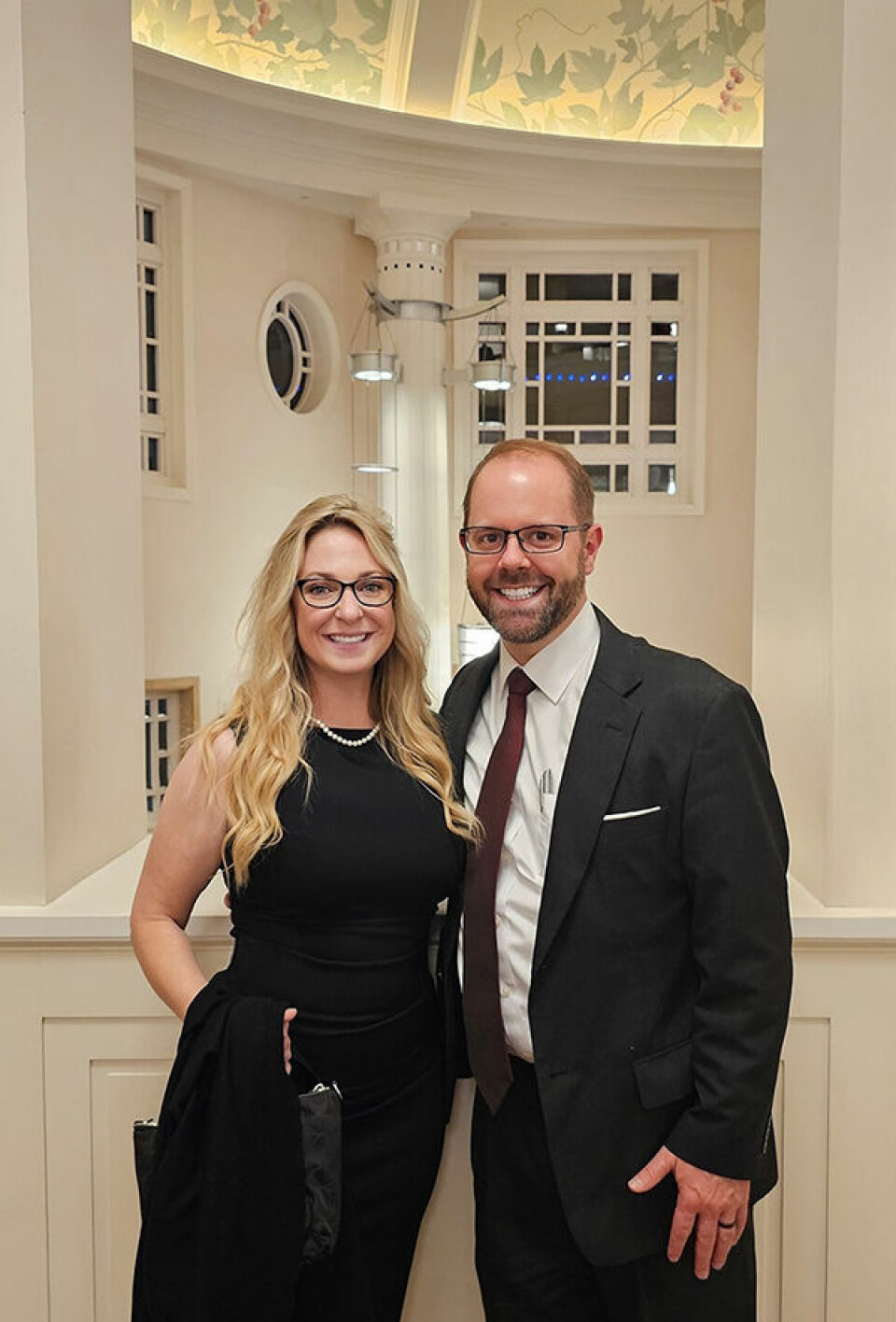
New Mexico native and NASA astrophysicist Danette Farnsworth helps lead Artemis II mission
She is the lead engineer for the main navigation flight control and propulsion systems



Published
Modified
Danette Farnsworth knew when she saw the solid-fuel boosters separate from the Artemis II, everything was good.
鈥淚 said, 鈥榃e鈥檙e golden. The rest is up to another team,鈥欌�� she said.
Farnsworth isn鈥檛 your average armchair observer, offering opinions on what NASA is doing right and wrong in its most recent manned launch. She is the lead engineer for the main navigation flight control and propulsion systems for Artemis II, a project she鈥檚 worked on since its first iteration and will continue with through its third phase.
Since June 2020, the Belen High School Class of 1999 graduate has been a senior system engineer with the National Aeronautics and Space Administration.
Farnsworth originally went to Los Lunas High School before transferring to Belen because they had an academic decathlon team, according to her mother-in-law, Jackie Farnsworth.
鈥淪he told people at Belen High School before she graduated that she was going to become an aerospace engineer,鈥� Jackie Farnsworth said.
Growing up on the family dairy in Bosque, Farnsworth knew she really didn鈥檛 want to make that her life.
鈥淢ilking hundreds of cows? Hauling hay? No,鈥� she said with a chuckle.
Wide-open skies
Although a career in agriculture wasn鈥檛 on the horizon for her, growing up in the wide open, clear-skied community of Bosque did prove to be a launch pad for her career.
Her father, Daniel Clouser, grew up during the era of the original moon launch and was 鈥渉uge into space,鈥� she said. 鈥淗e had a telescope and would show me planets. We spent a lot of time outside, in the middle of nowhere, looking at stars and he would point out constellations. He was a wealth of knowledge about space and history.鈥�
In high school, she had the chance to build a satellite for an honors science class, a project her father was happy to help with. Her discovery of space continued when she found a meteorite on the Carrizozo ranch owned by her father and grandparents.
鈥淚 was hooked,鈥� Farnsworth recalls.
While attending BHS, she excelled in science, math and physics, winning science fairs often, but she also had some struggles.
鈥淚 was super good in math and science, understanding the conceptual, but I struggled with reading and writing and no one knew why,鈥� she said.
Farnsworth said she was able to do well on the ACT and, in a last-minute decision, followed a friend to New Mexico Tech in Socorro to take advantage of their astrophysics program. Once there, her struggles with reading and writing continued, leaving Farnsworth frustrated to the point of tears.
Her English professor asked if she鈥檇 ever been diagnosed with dyslexia. She had never heard of the language-based disability.
鈥淪he recognized it because she was dyslexic,鈥� Farnsworth recalled.
The professor recommended she drop the class and get a formal diagnosis. The two spent a summer working together to help Farnsworth learn how to address her specific reading needs.
鈥淪he was a phenomenal woman. She showed me my brain is just different,鈥� she said. 鈥淚 haven鈥檛 put down books since.鈥�
Going into her sophomore year at Tech, Farnsworth began to home in on what she really wanted to do with her life 鈥� build rockets and study space. Aerospace engineering was the degree she needed to pursue, but NMT didn鈥檛 offer the program.
A professor told her about Embry-Riddle Aeronautical University, a private university associated with the U.S. Air Force and the No. 1 university in the world in aeronautics. After receiving glowing recommendations from her professors at Tech, Farnsworth was accepted. The only hurdles were paying the tuition and telling her father she was leaving New Mexico for Embry-Riddle鈥檚 Arizona campus.
鈥淭hat was hard but he understood,鈥� she said.
The tuition problem was solved by enlisting in the Air Force. Farnsworth knew her next step was going to space, to be an astronaut, but there was another challenge. She was diagnosed with Wolff-Parkinson-White syndrome, a heart condition.
鈥淭hey gave me the boot,鈥� she said. 鈥淚t was heartbreaking.鈥�
Jackie Farnsworth said that her daughter-in-law always had a fascination with the cosmos and although she wasn鈥檛 able to go into the stars, she still found a way to work with them.
鈥淪he knew from the time she was a sophomore in high school that she wanted to be an astronaut,鈥� Jackie Farnsworth said. 鈥淪he started off in the astronaut program, but she ended up being pretty important at NASA.鈥�
Farnsworth said the people in her life encouraged her to stay, pointing out that while she might not be able to go into space, there were endless opportunities with the space program in ground work and mission control. She graduated with a Bachelor of Science in aerospace and minored in physics, math and computer science.
Her degree work had multiple challenges, including getting married to her first husband and pregnant halfway through her four years of classes. Undeterred, Farnsworth calculated she had 21 credit hours, work she could complete in a year and a summer, rather than two traditional academic years.
She was a researcher in the Embry-Riddle physics department, which led to an internship working on the Los Alamos National Laboratory theoretical antimatter propulsion system.
鈥淚t was all so amazing. When I needed to take a test, the professor would let me sit in another room with my son. I was very, very blessed with so much support. I had a lot of struggles but I had the support when I needed it,鈥� Farnsworth said.
New beginnings
After she graduated, she began looking for a job and graduate school programs. That鈥檚 when her husband asked for a divorce.
Farnsworth applied everywhere for grad school and a job. She landed both in Huntsville, Alabama 鈥� working on missile defense for Lockheed Martin and being accepted to the University of Alabama in Huntsville, a place she described as 鈥渇ull of nerds and high tech, the military and NASA.鈥�
Farnsworth earned her Ph.D. in astrophysics from UAH. With her professional life progressing, she soon received a blast from her past on a personal level. At the encouragement of his mother, Jackie, Grant Farnsworth 鈥� a former classmate 鈥� reached out.
鈥淲e were really good friends. We actually went to prom together,鈥� she said. 鈥淗e still has the picture.鈥�
Jackie Farnsworth said when she learned Farnsworth was divorced, she pushed her son to reach out.
鈥淲e liked her even when he was dating her a long time ago,鈥� she said. 鈥淲e鈥檙e really so happy to have her in the family. She鈥檚 just the most down-to-earth person you鈥檝e ever seen.鈥�
When Grant reestablished the relationship, he might not have known exactly who his future wife was. Her social media biographies said she was a cake decorator 鈥� a renowned international cake artist, actually.
鈥淚鈥檝e won several international competitions, been on the Food Network,鈥� Farnsworth said, 鈥渁nd I hold a patent for robotic cakes.鈥�
During the pandemic, she got bored and decided to get a culinary arts degree from a French pastry school.
鈥淚 have a lot of energy and get bored fast,鈥� she said, laughing.
Beyond her accomplishments working on Artemis and her awards as a cake designer, Farnsworth also has a in her image.
鈥淭hey put out a request for women with certain occupations and asked for them to send in photographs and stuff,鈥� Jackie Farnsworth said. 鈥淪ome people at her work kind of badgered her a little bit.鈥�
The astrophysicist Barbie comes with a telescope, a star chart and a shirt that has the nebula printed on it 鈥� all based on a photo of Farnsworth.
鈥淚t was one of two that they published of smart Barbie dolls,鈥� Jackie Farnsworth said.
The next frontier
Now that Artemis II has launched successfully, she is working on the Artemis III project as the lead engineer.
鈥淚 am a senior-level engineer and senior-level scientist. I have all the qualifications for both,鈥� she said.
The Artemis program is what drives NASA鈥檚 Moon to Mars Architecture, which will define the elements needed for long-term, human-led scientific discovery in deep space, according to NASA鈥檚 webpage on the project.
Beginning with the unmanned Artemis I, Farnsworth has been the lead engineer working with a team to do the analysis to make sure the rocket鈥檚 guidance and propulsion systems are 鈥渢alking鈥� to the boosters and main engines.
The testing for Artemis II lasted about five years, and as a manned mission, it brought extra stress to an already high-pressure situation.
鈥淚 knew that she was working on the design because every time they added half a pound to it, she had to rework all the computations for the propulsion system again,鈥� Jackie Farnsworth said. 鈥淭hey had to know exactly what was going up and how much it was going to weigh.鈥�
The foundation of the Artemis is the Apollo rocket, Farnsworth said, calling it a mesh between the Apollo and the space shuttle.
鈥淭he foundation of the technology existed but it was antiquated,鈥� she said.
Working on a manned flight to the far side of the moon, the specter of the 1986 Challenger disaster was always on the minds of those working on the Artemis.
鈥淲e still have some engineers and scientists from then involved. They talked to us and passed on their lessons learned,鈥� Farnsworth said. 鈥淣ASA really ramped up the risk and safety aspect, which put stops on a lot of progress to take into account risk mitigation. There are a lot of review boards. It鈥檚 quite an intense process.鈥�
When Artemis II launched, Farnsworth was able to include a cube satellite 鈥� about the size of a loaf of bread 鈥� she designed and built, which contains a camera system to take pictures of the impact marks on the far side of the moon.
The satellite is called Hermes, Greek for 鈥渕essenger.鈥�
As an adjunct professor at Texas Christian University in Fort Worth, Texas, Farnsworth says she might make the transition to full-time professor to spend more time with her family. In the meantime, there鈥檚 still more to do for NASA.
鈥淵ou really have to have that drive,鈥� she said. 鈥淭o say, 鈥極K, what鈥檚 next?鈥欌��


