Evolutionary tale: 'Ancient Life' at NM Museum of Natural History & Science tells the story before the dinosaurs



Published
Modified
鈥�Walk Through Time鈥� at the New Mexico Museum of Natural History & Science is now complete with the addition of the Bradbury Stamm Construction Hall of Ancient Life.
The permanent exhibit opens on Saturday, Feb. 15. 鈥淲alk Through Time鈥� tells the story of 300 million years of evolution before the dinosaurs, according to the museum鈥檚 website.
The Hall of Ancient Life will feature about 300 fossils, which have never been displayed at the museum. The fossils of ancient fish, amphibians, invertebrates, reptiles and more were discovered throughout New Mexico.
鈥淲e have fossils from (the greater Albuquerque) area, but we have fossils that represent at least half of the counties in the state of New Mexico,鈥� said Anthony Fiorillo, executive director at the NMMNHS. 鈥淎nybody, anywhere in the state, could probably come to this exhibit and find a story from probably close to their backyard. That was one of our goals, was to make it a statewide exhibit.鈥�
The fossils give insight as to what walked, crawled and swam throughout the state millions of years ago.
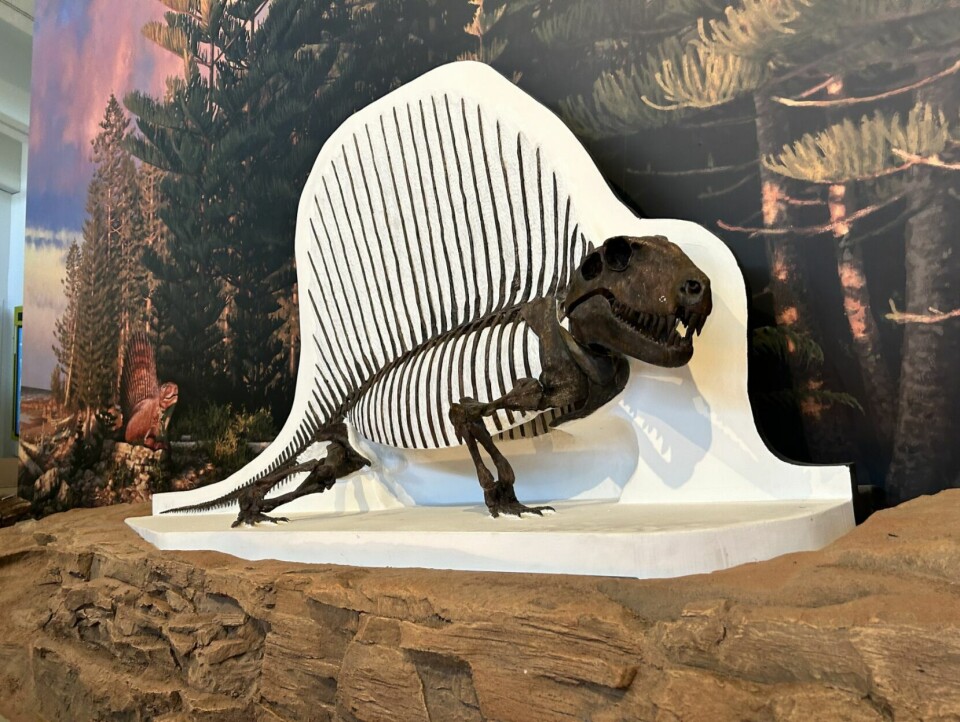
鈥淲e鈥檙e pretty excited people can come here and see things like a set of footprints left behind by a six-foot-long millipede that thankfully isn鈥檛 around anymore,鈥� Fiorillo said. 鈥淎mong other things, we have some beautiful sets of footprints and skeleton of a sail-backed reptile, four legged, that came from south of Albuquerque. The skeleton came from Otero County. The tracks came from what is now Prehistoric Trackways National Monument, down toward Las Cruces.鈥�
The reptile fossils belong to the group of reptiles that eventually gave rise to mammals, according to Fiorillo.
鈥淚n some ways, those sail-backed reptiles are their great, great, great, great, great, great-grandparents,鈥� he said. 鈥淲e can go through some of the technical stuff, but the punchline to all of this is it鈥檚 3,000 square feet of cool. It鈥檚 a collection of things no one has seen before.鈥�
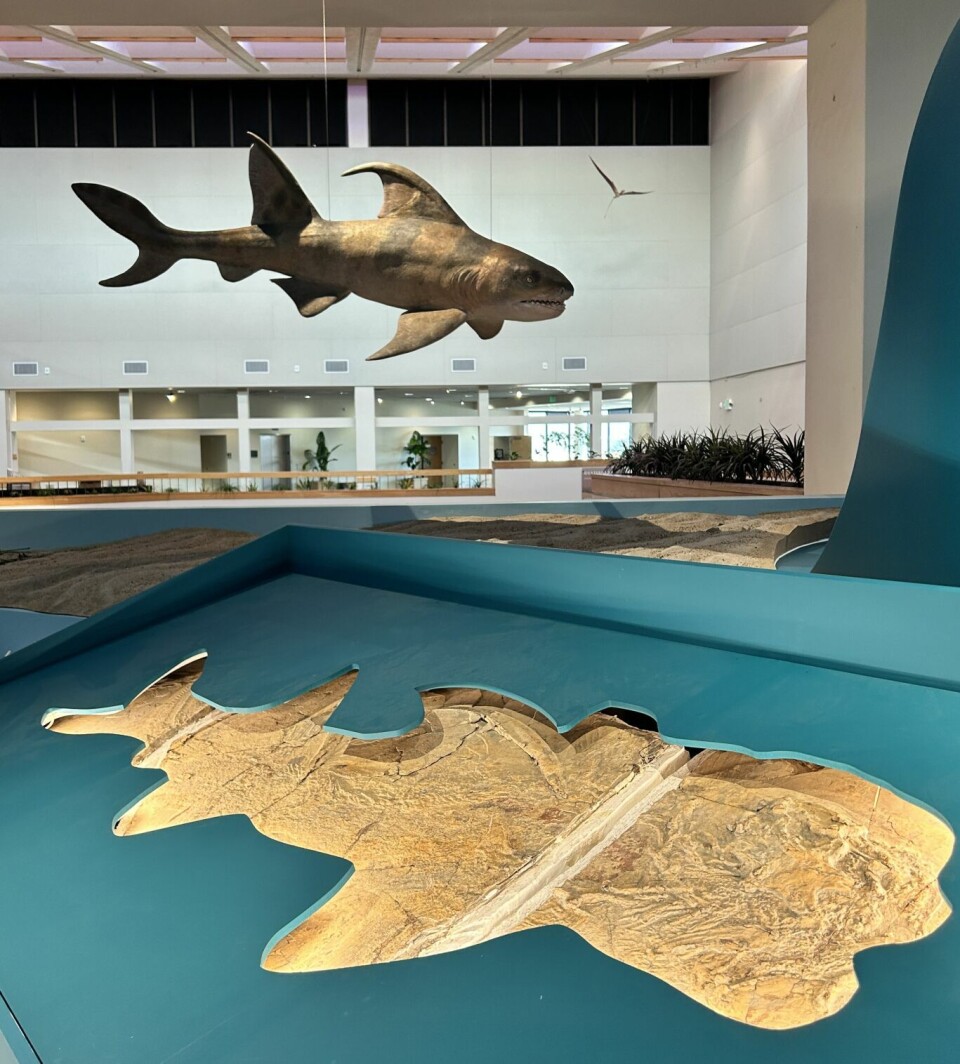
A highlight of Ancient Life is a shark skeleton that has a prominent place in the exhibit.
鈥淭he actual skeleton is about 7 feet long and it has got a gorgeous case,鈥� Fiorillo said. 鈥淎s you walk into the atrium and you look up, there is a reconstruction, a model of the shark full size, hanging so that it鈥檚 an enticement to come up the stairs and see what we have.鈥�
The museum named the new space Bradbury Stamm Construction Hall of Ancient Life to reflect its partnership with the construction company and the time period the exhibition represents.
鈥淭he ancient life part of it is that 300 million years of geologic time is technically called the Paleozoic,鈥� Fiorillo said. 鈥淢ost people won鈥檛 know what Paleozoic is, but Paleozoic literally means ancient life, and that鈥檚 sort of the conversation that you get a sense about in the intro area. And then the journey begins. And when you walk in past that area, the Paleozoic Era, is divided into geologic periods, and there will be cases with some artwork illustrating sort of the summary of each of those geologic periods with some key fossils.鈥�
A centerpiece of Ancient Life is the giant predatory fish skull of a Dunkleosteus.
鈥淎nother way to think of it is that it was the terror of the seas back then, and if you will, it was sort of the T. rex of the ancient oceans,鈥� Fiorillo said. 鈥淚t鈥檚 pretty prominent.鈥�
The hall is color-coded by geographic area, so visitors know if they are on land or sea.
鈥淲here the walls are blue, that鈥檚 when the ocean was over New Mexico, and when they鈥檙e green, that鈥檚 when the oceans receded and land was there,鈥� Fiorillo said.
An area in Tijeras, where the Kinney Quarry is located, has become known throughout the country for its fossil discoveries.
鈥淔or decades, they have been collecting fossil fish there and we have one of the best collections of fossil fish from that quarry,鈥� Fiorillo said. 鈥淧eople will get to see a variety of fossil fish, including that shark and a few other things.鈥�
As visitors walk through the exhibition, they will encounter various dioramas.
鈥淲e took sort of an ecological approach to this all, so that it鈥檚 more like the fossils within their environments, as opposed to the taxonomy of things, this evolved into that which evolved into that,鈥� Fiorillo said. 鈥淲e took a different approach from some of the other exhibit galleries that we have going on right now.鈥�
At the end of the hall, guests will be able to participate in an interactive experience.
鈥淲e鈥檝e got an interactive that will help the public understand geologic time and it鈥檚 a very dynamic piece,鈥� Fiorillo said. 鈥淲e worked with an exhibit company in Corrales called Ideum, and it鈥檚 a real cool interactive that鈥檚 got everybody a little giddy right now. It鈥檚 called 鈥楶ostcard from the Paleozoic.鈥欌��
The interactive feature allows visitors to pick an ecosystem that they liked in the hall. They will be able to add animals and plants, as they see fit, and take pictures of themselves within that reconstructed environment. They can then add a QR code to their phones and go home with a souvenir.
鈥淲e鈥檙e pretty excited about this new way of storytelling,鈥� Fiorillo said. 鈥淲e hope to continue the momentum off of this hall and continue it moving throughout the building with new ways to tell really cool old stories.鈥�
Evolutionary tale: 'Ancient Life' at NM Museum of Natural History & Science tells the story before the dinosaurs

---


