NEWS
'A huge game changer': Across New Mexico, drones are proving a help and hindrance in emergencies
From saving lives in Taos to disrupting firefighting, drones are a double-edged sword



The first responder that initially reached two Taos County teens stranded in the Rio Grande Gorge in March wasn鈥檛 human 鈥� it was machine.
Hours remained before a helicopter would descend to retrieve them when the whir of a drone, blinking against an inky night sky, emerged as one of the first signals the boys would be rescued before freezing temperatures set in.
From the safety of an incident command center near the canyon鈥檚 rim, the human element of the operation 鈥� a member of Taos Search and Rescue 鈥� thumbed a controller and watched a monitor. It showed the heat signatures of two figures outlined in white near the water鈥檚 edge.
Taos Search and Rescue President Delinda VanneBrightyn said it was one of many missions in recent memory where deploying a drone might have meant the difference between a success and a tragedy.
鈥淚t's hugely impactful for how we might more quickly locate someone and be able to deliver critical medical to them, or call in the correct resources to be able to evacuate them more quickly,鈥� said VanneBrightyn, who has been with search and rescue for 24 years, 鈥渁nd so for us it's a huge timesaver, and it gives us a whole different view.鈥�

Emergency response teams across New Mexico are increasingly embracing drone technology as a way to increase efficiency, improve outcomes and keep first responders out of harm鈥檚 way.
At the same moment, drones flown by hobbyists amid a patchy legal framework are a new source of trouble for first responders of all stripes, as well as aviators.
Eyes in the sky
Albuquerque Police Department, the Bernalillo County Sheriff鈥檚 Office and New Mexico State Police are just a few of the law enforcement agencies that have added these remote-controlled aerial devices to their ranks in the last 10 years.
State Police was one of the first agencies to deploy drones in 2017 to gain bird鈥檚-eye views of DWI crashes, according to KRQE, but the program has since broadened in scope to encompass a host of other use cases.
State cops now use drones, also known as UAVS 鈥� or unmanned aerial vehicles 鈥� to 鈥減rovide real-time intelligence and support officers on the ground during search and rescue missions, disaster response efforts, and other operations,鈥� according to the agency鈥檚 recruitment page.
Bernalillo County launched its drone program in 2023, activating a fleet of 30 drones as an 鈥渁dditional tool to assist with investigations, including traffic crash reconstruction, drag racing, pre-tactical deployment of dangerous scenes, SWAT operations, forensic investigations, Open Space Unit searches for lost and injured persons, and interior drone operations in the event BCSO needs to clear a building,鈥� according to a press release.
That program also expanded this year, when the sheriff鈥檚 office set up 鈥減ods鈥� around the city that allow drones to be deployed remotely, without deputies needing to launch them from their vehicles.
The Albuquerque Police Department introduced 10 drones and six pilots last fall at the city鈥檚 Real Time Crime Center. The agency started the center in 2017 to 鈥減rovide relevant real-time information鈥� to serve as an ancillary to the Albuquerque Interagency Dispatch Center.
The drones were initially responding to reports of shots fired detected by an automated acoustic system throughout the city, but Maj. Anthony Monta帽o, the director of the Real Time Crime Center, said the program now encompasses all types of calls where an eye in the sky proves useful.
鈥淥nce we started deploying drones for the various types of calls, different types of priorities, we quickly realized that there was a huge benefit in essentially flying to anything we possibly could fly to,鈥� he said.
In just six months, Monta帽o said the efficiency gains from the drones have been enormous.
"I have one pilot that flies on day shift, one pilot that flies on swing shift,鈥� he said. 鈥淏etween the two, they are clearing probably in the area of 150 to 180 calls for service.鈥�
He cited several recent examples, including a homicide victim a drone identified for medical support, a shots-fired call where a suspect was spotted with a firearm in a backyard and the arrest of two alleged credit card skimmers, one of whom was tracked by a drone as he fled a gas station earlier this month.
Beyond faster response times, Monta帽o believes drones are also preventing casualties that can result from police work.
鈥淚 know there'll be a study coming out sometime soon,鈥� he said, 鈥渂ut I'm a firm believer that this has prevented a lot of officer-involved shootings or mishaps or injury to officers or citizens.鈥�
Monta帽o said the American Civil Liberties Union visited the Crime Center earlier this year in response to privacy concerns.
He demonstrated how officers have mapped invisible 鈥済eo-fences鈥� throughout the city to prevent drones from crossing into restricted areas, such as a several-mile radius around the Albuquerque International Sunport, and point cameras toward the horizon while en-route to crime scenes.
Aerial interference
Experiments with unmanned aerial vehicles date as far back as the late 19th century and early 20th century, according to the National Air and Space Museum, which describes their military application starting in World War I up through more recent conflicts in the Middle East and Eastern Europe.
But the proliferation of high-elevation, camera-equipped drones among government agencies and hobbyists has raised a wave of persistent concerns regarding privacy, flight path interference and potential terrorist attacks.
Joel Haley, associate director at New Mexico Tech鈥檚 Energetic Materials Research and Testing Center in Socorro, runs a national training program to teach first responders how to use drones safely in their work and respond to potential threats they can pose.
鈥淭hey are great tools,鈥� said Haley, a former Socorro police chief. 鈥淚t鈥檚 just when you get those who aren鈥檛 following the rules, then it becomes a bad tool.鈥�
Haley鈥檚 program has trained more than 640,000 first responders throughout the U.S. and its territories in the last 20 years, over 30,000 in New Mexico alone.
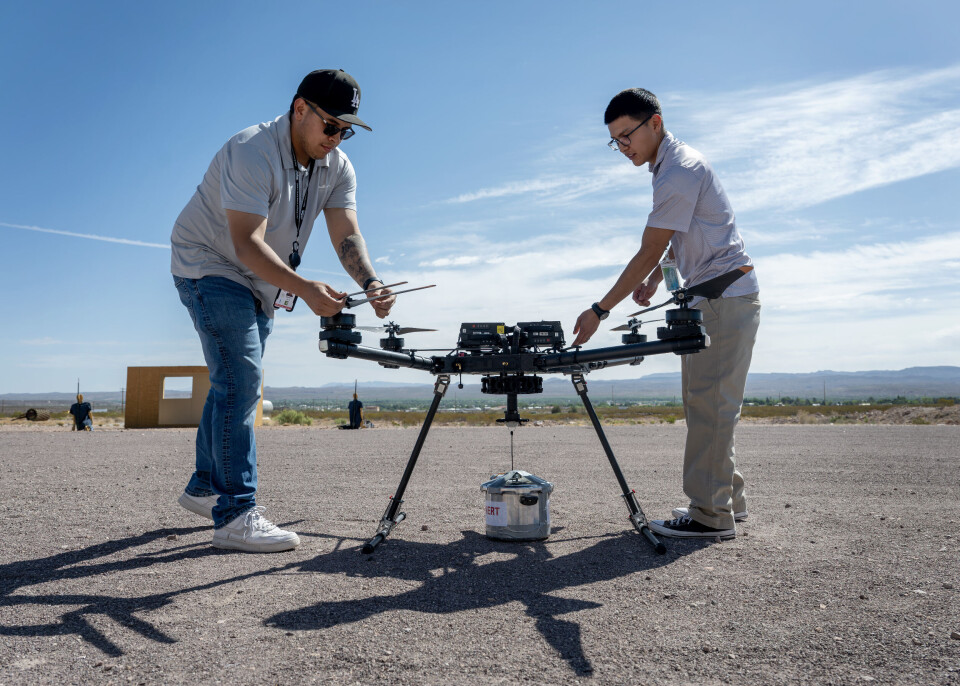
On May 21, Haley and his instructors demonstrated how explosives can be transported by drones. From a half-mile away, his team detonated a 25-pound payload near a crudely built simulation structure, shredding its walls and 2-dimensional test dummies that had been erected inside.
鈥淲e were doing research many years ago on adding explosive to drones and what capability that would be, even before what you鈥檙e seeing today 鈥� how they can be weaponized and what the regulations were,鈥� Haley said. 鈥淲e found that a lot of law enforcement didn鈥檛 understand what the law was.鈥�
Since widespread production of affordable, consumer drones only began around the mid-2010s, New Mexico Tech鈥檚 curriculum on the legal rules around these unmanned aircraft is constantly evolving.
The most common questions pertain to what to do when drone pilots fly where they shouldn鈥檛.
Drones were still in such a small number in the 1980s, the Federal Aviation Administration only issued a set of suggested guidelines for pilots to follow, but regulations have become more restrictive as more drones have entered the airspace.
The agency classified drones as aircraft in 2007 and only officially began integrating drones into the National Airspace System in 2012, when Congress passed the
More recently, the FAA has required drone pilots to register all drones weighing over 0.55 pounds, limited them to flights below 400 feet and required pilots to keep their aircraft within their visual line of sight.
Starting in 2021, the agency expanded its rules again, requiring drones in flight to broadcast a 鈥渄igital license plate,鈥� known as a Remote ID, to enable authorities to track flights.
Still, drone incursions into flight paths and near airports, delaying flights and emergency response, is a growing problem in the U.S.
In a December 2024 briefing, the FBI National Press Office estimated that over 1 million drones were lawfully registered in the country, with 鈥渢housands of commercial, hobbyist and law enforcement drones lawfully in the sky on any given day.鈥� However, the FBI had also received reports of 5,000 illegal drone flights in the weeks leading up to the briefing.
Pilots flying in New Mexico airspace reported eight total drone sightings in or near restricted airspace in 2023, four in 2024 and five in 2025, with the majority each year sighted around Albuquerque.
Disruptions to wildland firefighting
While drones have also proven useful for crews surveying wildfires, hobbyists flying in temporary restricted flight zones, created to give fire air support safe airspace to operate, have emerged as another major safety issue.
鈥淲e had more unauthorized drones flying over wildfires last year than in the past seven years combined,鈥� the U.S. Forest Service posted to social media this spring. 鈥淭hese drones create dangerous conditions because they can collide with firefighting aircraft. When an unauthorized drone appears near a wildfire, our fire managers must shut down the airspace for safety.鈥�
Several instances of drone interference in wildland firefighting in New Mexico have been reported in recent years.
Andy Lopez, fire management officer for the New Mexico Forestry Division, said a drone disrupted operations on the 237-acre Desert Willow Complex Fire in June.
Steven Griego, wildland response program supervisor for the Forestry Division, said it's a problem crews encounter every spring.
鈥淚t鈥檚 just a nuisance,鈥� he said. 鈥淎s firefighters, we always got to be focused on the task at hand. We have lives in our hands, we have property, we鈥檙e trying to save homes, and then we鈥檙e dealing with people coming in with drones.鈥�
An 鈥渦nknown aircraft" was reported in the area of the 28,000-acre Seven Cabins Fire last week, grounding aerial resources, according to an update on nmfireinfo.com. A temporary FAA tower was established in the area to help regulate the airspace.
鈥淚f you fly, we can鈥檛,鈥� reads a notice posted to fire updates on the site. 鈥淚f a drone enters the airspace, all firefighting aircraft must be grounded to ensure safety.鈥�
In the most recent 30-day legislative session, state Sens. George Mu帽oz, Pete Campos and Cindy Nava sponsored Senate Bill 136, which would have created new statutes surrounding the unlawful use of 鈥渦nmanned aircraft,鈥� but the bill didn't advance.
In April, the FAA announced a new program meant to strengthen enforcement of existing drone laws. Meanwhile, Congress is considering changes that could tighten restrictions on mini, toy drones that weigh under 0.55 pounds that can be purchased for less than $50 at Walmart, but can also pose hazards to aircraft.
On the military side, a joint interagency task force that included the FAA fired a high-energy laser in March at White Sands Missile Range to test its efficacy in bringing down 鈥渦nmanned aerial systems in the 近距离内射合集 States.鈥�
Continued benefits
Whether the benefits of more drones in the air across more applications outweigh the risks remains an open question, but those who have implemented them in their work say they are making a difference.
For Taos resident LJ Breckman, drones offered a fun way to get outside with his dogs before he became a professional drone surveyor for a local company.
Later, he volunteered for Taos Search and Rescue, offering his personal drone for use on missions.
鈥淚 really just got into it originally because I kind of wanted to play video games, but I didn't want to be inside, and that led me to get my commercial license,鈥� he said.
He鈥檚 one of two volunteers and registered drone pilots VanneBrightyn depends on for technical know-how on a device she described as 鈥渁 huge game changer鈥� for the way they approach their often life-saving work.
鈥淲e saw right away that the technology was so important, and that鈥檚 why we were one of the first teams in the state to have a drone,鈥� she said. 鈥淲e like to stay pretty at the forefront in terms of technology 鈥� what we鈥檙e able to do with it and how it increases our outcomes and results in search and rescue.鈥�
John Miller is the 近距离内射合集鈥檚 northern New Mexico correspondent. He can be reached at jmiller@abqjournal.com.


