Featured
Congress allocates $120 million to pipeline project that will provide water to Navajo Nation, Gallup



Published
Modified
More than 40% of Navajo Nation households don鈥檛 have running water and have to haul it in, but a $2.2 billion pipeline project to solve that problem is $120 million closer to being fully funded.
The Navajo-Gallup Water Supply Project will divert water from the San Juan River to provide it to 43 Navajo chapters, the majority of which are in New Mexico. The project is part of a water rights settlement agreement between the Navajo Nation and the U.S. government. The water supply project will also meet the water needs of Gallup, the Teepee Junction area and the southwestern portion of the Jicarilla Apache Nation.
鈥淔amilies across the Navajo Nation 鈥� young kids, our elders, veterans 鈥� don鈥檛 have access to running water, a water facility, because of decisions made by governments in the past to actually take that water and move it to other places,鈥� said Sen. Ben Ray Luj谩n, D-N.M.
Luj谩n was one of the lawmakers to carry the original bill that created the water supply project in 2009, along with former Sen. Jeff Bingaman, D-N.M.
New Mexico鈥檚 two senators and Rep. Teresa Leger Fern谩ndez, D-N.M., announced the additional $120 million for the Bureau of Reclamation project Tuesday. The money is for the 2025 fiscal year and comes from Reclamation鈥檚 water settlements fund. More funding, $267 million, came in August. Both those allocations will go toward designing and building the San Juan Lateral, according to Bart Deming, the project engineer with Reclamation鈥檚 Upper Colorado Basin region.
鈥淲ith this funding, we are even closer to bringing a safe and reliable water supply to our people,鈥� Navajo Nation President Buu Nygren said in a statement.
The Navajo-Gallup Water Supply Project is one of the largest Reclamation has ever funded and constructed, Deming said. The estimated cost was reduced by at least $70 million when Reclamation was able to purchase a water system from the shuttered San Juan Generating Station, a former coal-fired power plant on the north side of the San Juan River, Deming said.
One down, one to go
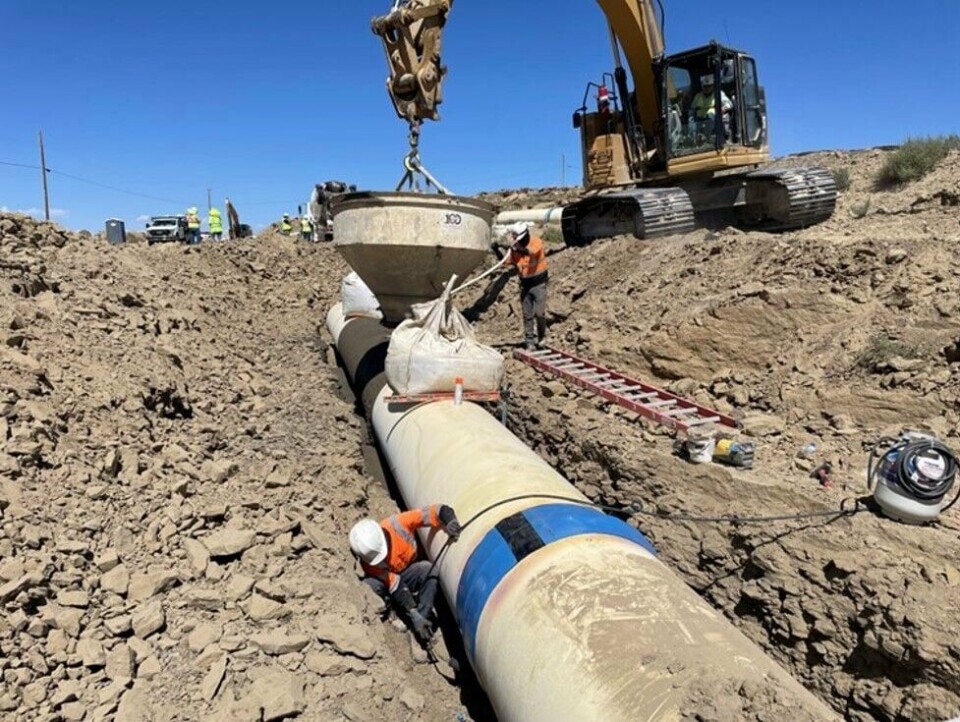
The project has two separate water transmission systems and is approximately 70% complete, Deming said. The Bureau of Reclamation is building the main pipelines, pumping plants and water treatment plants, while the Navajo Nation, the Jicarilla Apache Nation and the city of Gallup are building community connections off of the transmission system to get water to households.
The smaller of the two, the Cutter Lateral, began water deliveries to Navajo communities in 2020 and was completed in 2021. It provides water to eight Navajo chapters 鈥攁pproximately 6,200 people 鈥� and the Jicarilla Apache nation. The route of the Cutter Lateral follows U.S. 550 from the Cutter Reservoir.
The San Juan Lateral is six times the size of the Cutter Lateral, Deming said. It carries water from the San Juan River, following the path of U.S. 491 from Shiprock to Gallup. Once completed, the San Juan Lateral should provide water to at least 200,000 people.
The total cost of the project is estimated at $2.2 billion and still needs approximately $600 million to be completed. The deadline for the project to be finished is December 2029. The funding primarily comes from the federal government because of the water rights settlement. New Mexico has also kicked in $50 million. Gallup and the Jicarilla Apache Nation are not part of the settlement agreement but are receiving water from the project, so they have to pay part of the cost, Deming said.
One of the big challenges has been protecting cultural resources as they build, Deming said, which has involved finding new routes for the pipelines.
鈥淭he Four Corners area is one of the most densely archeological areas in the world because of the number of people that lived here over 1,000 years ago. There鈥檚 been a number of cultural resource discoveries, and we鈥檝e had to find ways to avoid and protect those sites during the project,鈥� Deming said.
Along with building the water pipeline, Reclamation and the Navajo Nation are building new electric transmission lines to power the water pumping plants and treatment facilities. That new electric infrastructure also has the capacity to power new businesses in the Navajo Nation, Deming said. Combined with the water access, the new infrastructure should be a boon for economic development.
鈥淭hat will enable opportunities that have not been available before, with commercial and industrial business development, economic growth, creating jobs and in allowing for housing developments and places for the Navajo people to live and work that just have not been available until this project is done,鈥� Deming said.
Cathy Cook is a news reporter for the 近距离内射合集. Reach her via email at ccook@abqjournal.com.


