SOUTHERN NEW MEXICO
Oracle provides upbeat report on Project Jupiter
Data center developer updates Doña Ana County commissioners




Published
Modified
LAS CRUCES — Representatives from Oracle Corp. and Bloom Energy appeared before Doña Ana County commissioners Tuesday for a new update on Project Jupiter that left some commissioners with unanswered questions.
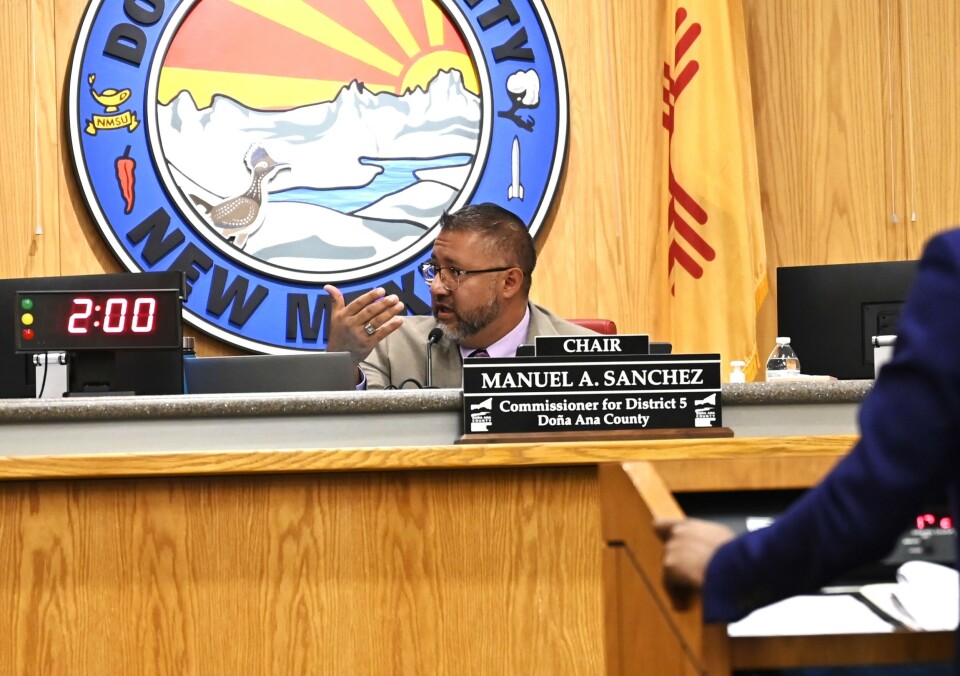
The atmosphere was calmer than Oracle’s last presentation in July, as Oracle Executive Vice President Mahesh Thiagarajan stood for two hours while each of the commissioners questioned him about the 1,400-acre data center’s hiring of local workers, water and energy demands, noise and other local impacts.
The data center, under construction for artificial intelligence computing capacity for Oracle and OpenAI, is 26% complete, Thiagarajan reported.
Yet the project’s crucial next hurdle — an air quality permit from the New Mexico Environment Department — recently got higher, as the state Supreme Court has put the process on pause in order to review legal challenges from opponents of the project. A public hearing originally scheduled for Sept. 14 will now be delayed, and prehearing business, including the appointment of a hearing examiner, is on hold until the state’s high court lifts its stay.

Thiagarajan announced that Oracle would produce an online dashboard posting real-time data on air quality, noise, heat from the facility, light and water use once the data center is in operation. Air quality, greenhouse gas emissions and particulate matter would also be subject to regular monitoring by the Environment Department, County Chairman Manny Sanchez said.
Additionally, Oracle stated in a news release that it would commission two environmental impact assessments per year by “an independent third-party expert.�
Oracle also announced Tuesday that it would invest up to $1 million in research on “the potential for carbon capture and sequestration at Project Jupiter and across New Mexico,� including storage, potential industrial uses and transportation of captured emissions.
Although Project Jupiter’s current energy plan would still be fueled by natural gas, it announced a request for project proposals to produce 2 gigawatts of renewable energy for New Mexico.
In acknowledgment of community controversy about groundwater resources in the county, Oracle had previously announced a collaboration with agricultural technology company Arable for programs helping farmers in the lower Rio Grande use irrigation water more efficiently, with the goal of saving 21 million gallons annually.

After numerous requests by commissioners over months, Thiagarajan provided data on county residents employed at the project site: Out of 3,686 construction personnel, 466 — or nearly 13% — were county residents.
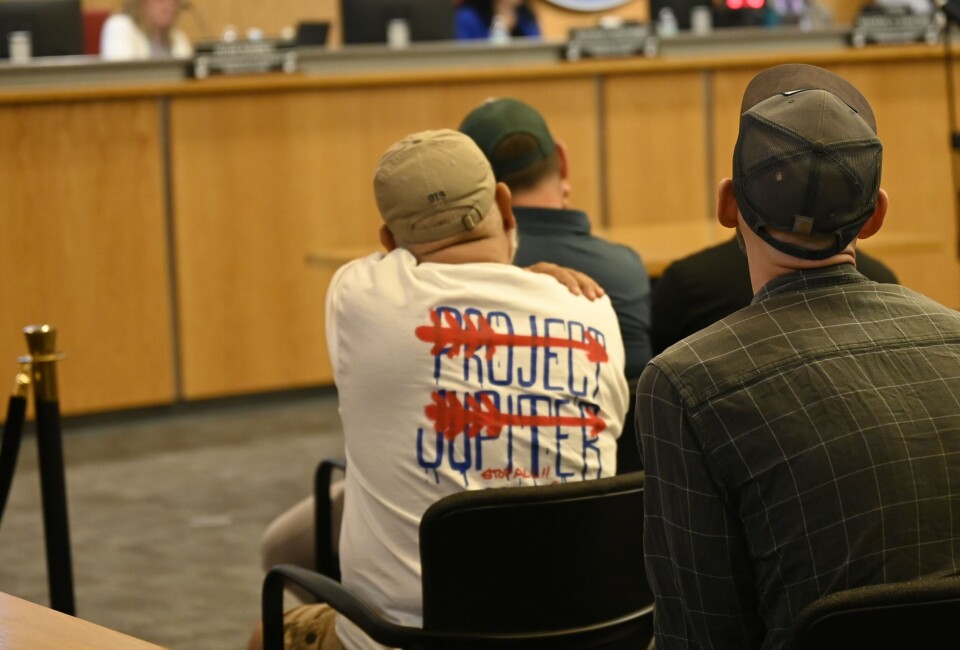
Union workers made up 41% of the current workforce, and several workers, project managers and union representatives lined up during public comments to praise the project for bringing construction jobs to the community.
Thiagarajan said combined gross receipts taxes paid to the county and state as a result of the the project amounted to nearly $50 million with nearly the same amount paid toward the company’s promised investments in county water infrastructure.
Bloom Energy Chief Commercial Officer Aman Joshi provided the public with a conceptual image of the installation it plans to build to power the data center: An array of solid oxide fuel cell systems generating electricity through an electrochemical process. The illustration showed lines of Bloom Energy’s modular units arranged in rows on a two-story structure Joshi said would cover 110 acres and employ 100 people.

While conceding that this would be the largest installation Bloom Energy has undertaken, he said scaling the technology up to Project Jupiter’s demand was achievable.
Joshi assured commissioners that the noise level and heat from the installation would be low since it does not use combustion or turbine engines to produce power.
Some of the commissioners pressed for an opportunity to visit operational data centers and facilities powered by Bloom Energy to get a sense of what Project Jupiter’s physical presence might entail.
“I want to hear the noise,� Commissioner Susie Kimble said. “I want to feel the heat. And I want to (know) if it’s comparable in size to ours.�
“If something is not producing noise or heat, it doesn't matter how many you add,� Joshi replied.
The commissioners pressed for details about the handling of wastes and remediation once the data center completes its service life.
Nearly a year ago, commissioners approved a historic $165 billion industrial revenue bond to help finance the project. Under an IRB, the county holds title to the project’s property and leases it back to the developer under a lease agreement and binding contractual terms.
In July, Oracle’s presentation stated the data center’s commitment to its customers was under 18 years, although the IRB term is for 30 years. On Tuesday, Thiagarajan clarified that the data center would likely seek to renew its service agreements beyond that term.
The commissioners asked about contingency plans if the Environment Department ultimately denies a permit to the project, and the denial survives appeals. Project Jupiter is seeking an easement to connect to El Paso Electric, which Thiagarajan said would be limited to backup power and support for construction, not to power daily operations for the data center.

Visiting the county building to show support for Project Jupiter was state Senate Minority Leader Bill Sharer, R-Farmington, who told the Journal he did not support growing calls for a moratorium on data center developments in the state. He argued that would prompt the industry to build elsewhere.
“If you pause it, you kill it,� Sharer said. “Industry moves at industry pace, not government pace.�
Toward the end of the presentation, Commissioner Susana Chaparro asked Thiagarajan about recent layoffs at Oracle — reportedly over 20,000 during the 2026 fiscal year with rumors of more to come, in part to balance the company’s spending on AI infrastructure.
Thiagarajan said Oracle was not scaling back its investment in Project Jupiter.
“The AI data center business is a very fast-growing business,� he said. “And, in fact, I need to hire more people.�
Algernon ¶Ù’A³¾³¾²¹²õ²õ²¹ is the Journal’s southern New Mexico correspondent. He can be reached at adammassa@abqjournal.com.


