SOUTHERN NEW MEXICO
Stansbury questions water use for Project Jupiter
Calls on state to assess data center's long-term water demand

Published
Modified
New Mexico’s water and environmental agencies responded to queries from U.S. Rep. Melanie Stansbury regarding a well supporting construction of Project Jupiter.
Releasing the letter Wednesday, Stansbury — a Democrat representing New Mexico’s 1st Congressional District in the center of the state — told reporters, “It's really, vitally important that the public continue to ask questions, continue to use their voices, and continue to put pressure on the state to do its due diligence and to make sure that this entity is held responsible.�
Last month, the New Mexico Supreme Court called a temporary halt to the Office of the State Engineer’s authorization of the well, located in Santa Teresa near the 1,400-acre data center campus under construction for Oracle Corp. and OpenAI. The order followed a petition by the Center for Biological Diversity for a temporary stay and court review of the authorization.
In an Aug. 24 letter, Stansbury sought answers from the Office of the State Engineer and other agencies as to “whether it has obtained the proper water rights and/or permits to operate in compliance with New Mexico water law and the state’s obligations under the Rio Grande Compact and interstate agreements.�
Responding on Aug. 28, State Engineer Elizabeth Anderson wrote that the water used for construction had been purchased from the owner of an existing water right that was permitted for “irrigation, municipal, industrial, commercial, and recreational purposes.� The water right allows for the diversion of 2,400 acre-feet annually from wells covering 32,000 acres of land.
An acre-foot, equivalent to the water needed to cover one acre of land with a foot of water, is a little under 326,000 gallons.
30 protests filed over well
Anderson wrote that the water right has been in consistent use for 20 years, but with annual production ranging from 130 to 2,500 acre-feet in a year. Since last November, Anderson reported the water right holder had diverted 1,445 acre-feet, “which is within the authorized Water Right use limit … and includes water uses for the Project Jupiter construction site.�

Petitioner Santa Teresa Capital of El Paso applied last October for a change to an existing water right — historically in place for irrigating a sod farm — plus emergency authorization to drill a replacement well within 100 feet of an originating well that had reportedly deteriorated.
Anderson said in her letter that OSE staff inspected the well and confirmed its condition before authorizing the replacement well. She also wrote that 30 protests against the emergency well had been filed and the OSE was still in the process of scheduling a public hearing 10 months later.
“The processing time for that hearing is within the normal range for hearings with that many protestants,� OSE General Counsel Nat Chakeres told the Journal. “With a large number of protests — and 30 is a large number — we have to individually confirm contact information for all of them, and that can get slowed down if some protestants don’t respond or can’t be reached. Now that we’ve completed that process, the administrative hearing has been docketed and the case will be proceeding towards a hearing.�
“Because the Water Right is a verified existing use, it is not a new depletion of water in the Lower Rio Grande and does not prevent deliveries of water under the Rio Grande Compact,� Anderson wrote to Stansbury, on behalf of OSE as well as the Interstate Stream Commission and the New Mexico Environment Department.
Under a settlement reached with Texas and the federal government in May, New Mexico must reduce its yearly diversion of groundwater by 18,200 acre-feet, or about 5.9 billion gallons, within 10 years.
Stansbury said she wanted to know, if the data center operations come with a heavy water demand, how other users such as farmers might be affected as that settlement is enforced.
“What they're saying is that this emergency well was drilled to access that water so that it could be used for site construction for Project Jupiter,� Stansbury said in a video conference with reporters. “Normally, when you have a change in location or a change in use of water, there is a transfer process involved — a water rights transfer — and there is a public process by which the public can ask questions and contest those water rights transfers.�
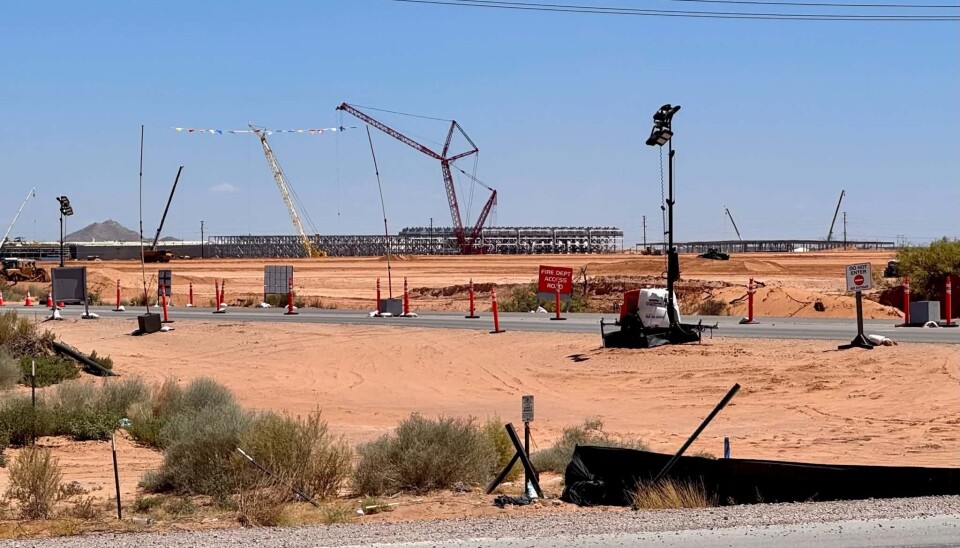
Stansbury said the letter left crucial questions unanswered about the emergency well authorization and the diversion of water under the historic water right. With no hearing into the numerous protests, Stansbury said, “they're operating without actually going through the process of determining whether or not that well is adversely affecting others in the region.�
Adding to her concern was the absence of any permit application indicating what the data center’s operational need for water would be. Oracle and builder Stack Infrastructure say the center will use a closed-loop cooling system requiring a one-time fill-up, and Oracle has promised to execute a “carefully developed plan� to manage water use for the center’s operations. It would also rely on municipal water for sinks and toilets used by office staff, the developers say.
“We are calling for an immediate inquiry into the long-term usage of water by Project Jupiter and believe that the state needs to do its due diligence before this project continues to proceed,� Stansbury said.
Algernon ¶Ù’A³¾³¾²¹²õ²õ²¹ is the Journal’s southern New Mexico correspondent. He can be reached at adammassa@abqjournal.com.


