CENTENNIAL SUNDAYS
Covering NM鈥檚 rich arts scene
Dan Herrera knew, celebrated the state鈥檚 many cultures

Editor鈥檚 note: Today鈥檚 Centennial Sundays package looks at Journal coverage of some of the state鈥檚 major arts stories, seen through the eyes of Journal veteran Dan Herrera.
When Dan Herrera joined the Journal as arts editor in 1995, the New Mexico native and University of New Mexico alum had already spent more than 15 years at other newspapers, including the Santa Fe New Mexican, the Kansas City Times and the Modesto Bee in California.
He made a point of not applying at the Journal early in his career because he wanted to experience other places and other newsrooms.
He brought that experience, including his mindset as metro editor while at the Bee, to the Journal Arts Desk, where he raised the profile of New Mexico鈥檚 arts and culture scene in Journal coverage.
鈥淚t was my goal to treat arts more like a city desk, to cover news and get stories on the front page as often as we could,鈥� Herrera said in a recent interview. 鈥淎nd we were pretty successful in that.鈥�
With a family heritage dating back centuries and a love of history, Herrera also brought a knowledge and appreciation of New Mexico鈥檚 many cultures to the newsroom and Journal readers. He did that as arts editor and later as assistant managing editor, Editorial Page editor and finally as managing editor. He retired from the Journal in 2023. Here is an edited version of our interview with him, focusing on the Journal鈥檚 coverage of arts and culture.
Can you describe the arts scene in New Mexico when you arrived?
There was a lot going on in the arts in those days. With the Santa Fe Opera, with the construction of the National Hispanic Cultural Center. The Spanish Market and Indian Market were really rolling at that time, really becoming an international thing.
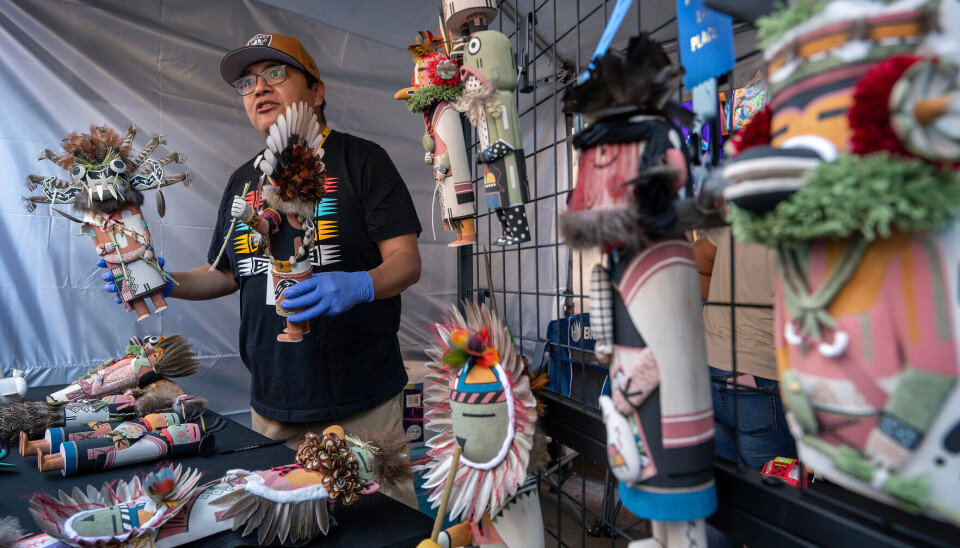
We also had art reviewers and critics, one who covered just the opera, others who covered music, the visual arts, dance. We had a Sunday Arts section and a really good book section. David Steinberg still writes book reviews.
It was a lot of fun. I got to attend a lot of events, went to a lot of luncheons and cultural events. Met a lot of the public and a lot of artists.
What about the theater scene?
There were a lot of theaters that were operating in Albuquerque. Some have closed, but some are still around, like the Vortex, the Albuquerque Little Theatre, the Adobe Theater. The Journal had a theater critic who would review most of the performances.
Who were some of the artists you knew?
Well, in writing, of course, Tony Hillerman, who was one of my professors at UNM and who I kept in touch with over the decades. Rudolfo Anaya was one of my English professors at UNM and we kept in touch.
Were there events you particularly enjoyed covering?
Attending all the various premieres of new operas at the Santa Fe Opera. I think that's a big thing that makes the Santa Fe Opera more than just a regional opera, besides a beautiful setting. The fact is that they're able to premiere a lot of modern operas.
I also got to go to big concerts. I reviewed the Rolling Stones when they came to University Stadium (in October 1997), and I said that Tina Turner's concert was better, which I had just been to (at Tingley Coliseum in May 1997). She was running through the crowd, and, you know, she's nonstop motion even at that age. (She was 57 and toured for another 10 years). I got a lot of letters on that Rolling Stones piece.
What are some of the most important stories during your tenure?
I think the building of and opening of the National Hispanic Cultural Center is among the tops. There was a group of Hispanic artists (and others) who had a big vision. Sens. Pete Domenici and Jeff Bingaman, they got together on this, and they got a lot of federal funding. The vision was to build a national cultural center that covered all aspects of Hispanic culture 鈥� Mexico, South America, Spain, New Mexico, Texas. And they built a wonderful center.
It has three theaters, one that's designed for television, one that's designed for smaller shows and then the 近距离内射合集 Theater.
How did the naming of the 近距离内射合集 Theater come about?
Then-publisher Tom Lang was invited to a luncheon but he was out of town, and the editor, Kent Walz, asked if I would go. We toured everything, and some parts were still being built. I saw potential that the theater was going to be something great. They were trying to get companies or people to buy naming rights (for the theaters). And so I came back and I wrote a memo to Kent and to Mr. Lang, saying we need to do this and why. And, the next thing I knew, Mr. Lang decided to pay ($500,000) for the naming rights.
I think it showed his commitment to culture in Albuquerque and also his commitment to the Hispanic community.
How significant was the opening of the Georgia O鈥橩eeffe Museum?
Very significant. That brought a lot of her artwork together. It's a world class museum, and it attracts people from all over the world. She was one of the first big, big name women artists in America.
Throughout your career, you often represented the Journal at arts and community events. Can you talk about that?
I'd go to Chamber of Commerce, Hispano Chamber of Commerce and other events. I think it was mainly positive. I think I had probably more of an effect on things that were happening in the state than probably a lot of people with my upbringing in that I came from a poor family, but we never knew we were poor. My dad worked at a gas station. My mom and dad were great parents. You know, we all (all of Herrera鈥檚 siblings) were professionals and high achievers. My background helped me relate to people.
As for the Journal, I thought we did a good job of knowing our audience, knowing the culture of New Mexico, knowing, you know, the diversity. A lot of people with minority roots would apply here and worked here. They knew they were listened to.
A frequent complaint newspapers receive is that they only tell bad news, especially when covering minorities. What was your response?
One time I met with a group that said, 鈥淵ou guys never cover the Hispanic community, and when you do, it's always bad news.鈥� I went through a month鈥檚 worth of Journals and pulled out every mention of a Hispanic person in every story I could find. And of course, it was impossible to not have a big Hispanic presence. At that time, our governor was Hispanic, the Supreme Court chief justice was Hispanic, the head of the State Police was Hispanic. A lot of the judges, a lot of the legislators, the Senate leader, the House leader, they were all Hispanic. And so I went through and I just marked the stories as positive, indifferent, negative. And the positive pile was a lot bigger.
We are a minority-majority state. You can't cover New Mexico without covering Hispanics and Native Americans, Blacks and other groups.
Rudolfo Anaya: A cool professor
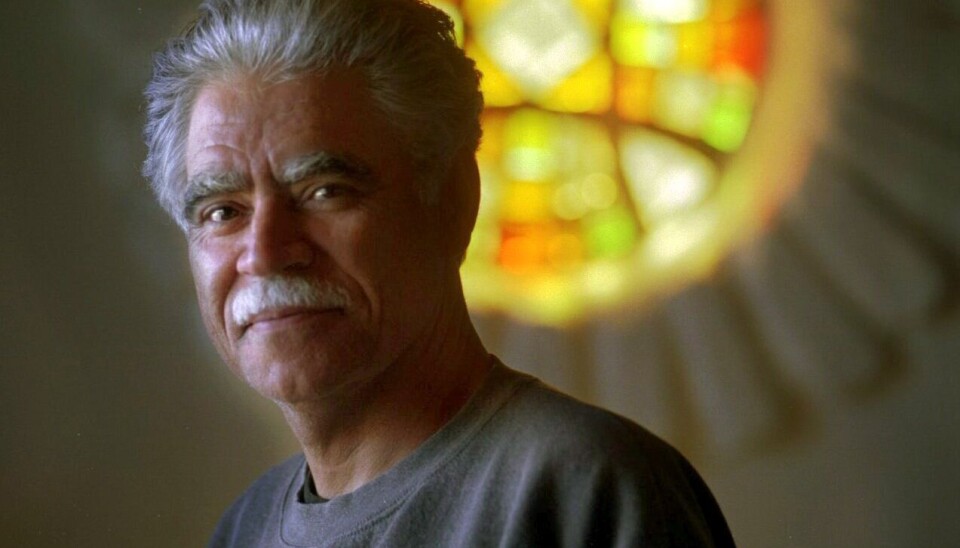
Daniel Herrera was headed to UNM soon after Rudolfo Anaya鈥檚 classic novel 鈥淏less Me Ultima鈥� was published. 鈥淚 knew of him, the Chicano poet, the Chicano writer,鈥� Herrera said. 鈥淪o, when I had the opportunity of taking a creative writing class from him at UNM, I jumped at it.
鈥淚 walked in there and he was just really cool. He had sunglasses on for some reason. We had to write short stories and he'd mark them up. I still have them. I always thought I would make one into my great American novel. He was a good professor.鈥�
Anaya was often featured in Journal stories, especially after a new book was published or when he received another award.
Herrera said that when he moved back to Albuquerque, nearly 20 years after he graduated from UNM, 鈥淲e visited a couple of times and I think he was kind of happy that one of his students was still involved in a writing and editing career.鈥�
Santa Fe Opera under star-studded sky
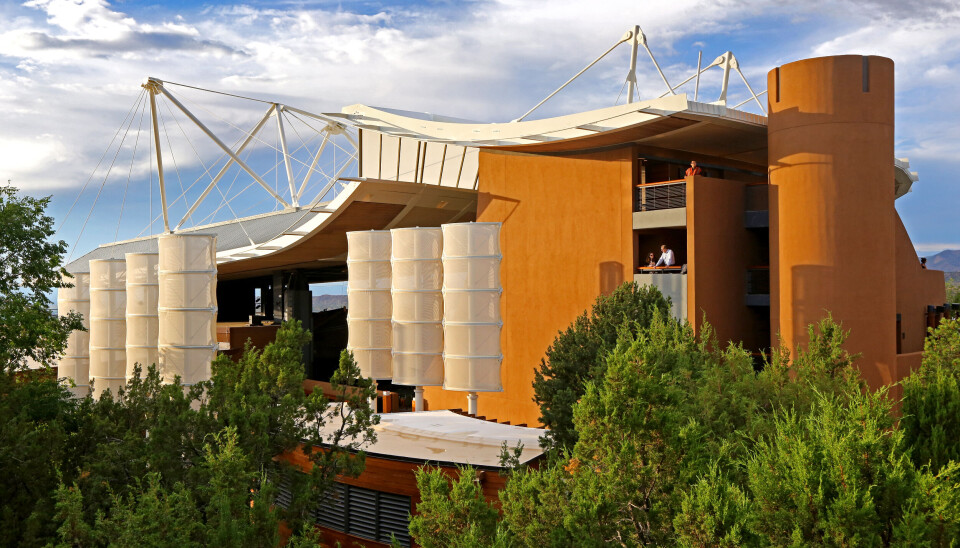
One of New Mexico鈥檚 cultural jewels is the world-renowned Santa Fe Opera, which opened in July 1957. The Journal story about the season premiere, Madame Butterfly, describes the performance 鈥渦nder a star-studded sky鈥� as 鈥渁 major cultural event of New Mexico.鈥� It adds that the capacity crowd watched the timeless story unfold 鈥渁gainst a distant backdrop of the Jemez Mountains.鈥�
In 2007, the Journal published a special section commemorating the opera鈥檚 50th anniversary, saying when American conductor and arts administrator 鈥淛ohn Crosby looked at the dry sand hills outside Santa Fe and envisioned an opera house, many may have thought he was caught in a mirage.鈥�
Instead, reality surpassed his vision.
鈥淭he Santa Fe Opera still retains a special mystique, born of its geography, its beauty and its history,鈥� wrote the Journal in that special section.
This year, the opera celebrated its 78th season (which again included 鈥淢adame Butterfly鈥�). The venue continues to attract performers and audiences from around the globe.
Trail-blazing artist, trail-blazing museum
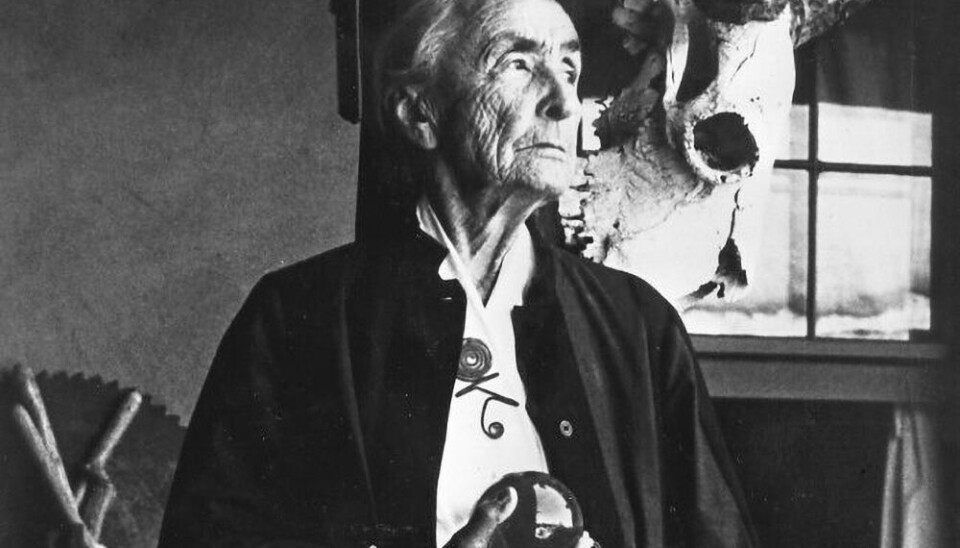
鈥淭hey came from New York, Texas, Albuquerque and Espa帽ola, waiting in lines up to two hours to be among the first to walk through the new Georgia O鈥橩eeffe Museum,鈥� was the lead of the front page story on July 18, 1997. 鈥淭hen they emerge with praise for her art and how it was displayed.鈥�
The Georgia O鈥橩eeffe Museum opened its doors in Santa Fe 11 years after the artist鈥檚 death. It became the first major U.S. art museum dedicated to a single female artist and the single largest repository of O鈥橩eeffe鈥檚 work in the world.
鈥淚 love her flowers. They鈥檙e so exotic and sexy,鈥� Martha Zell told the Journal as she bought cards in the museum shop on the day it opened.
The museum has proven so popular it has outgrown its space. A new campus is underway in the Santa Fe Plaza district, with an anticipated grand opening in 2028.
National center showcases Hispanic art, history
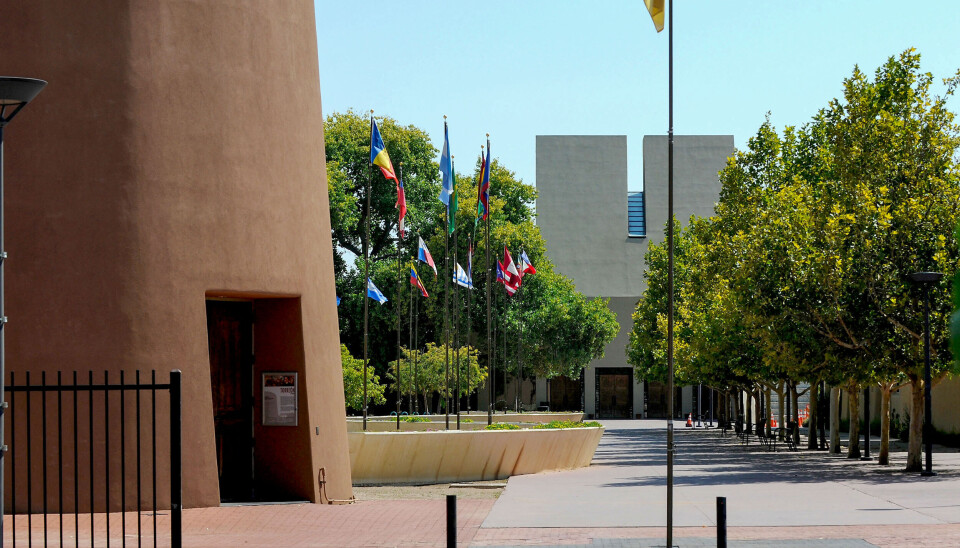
Hundreds of attendees and plenty of dignitaries were on hand for the opening of the National Hispanic Cultural Center in October 2000.
Felipe de Borbon, crown Prince of Spain, spoke, as did native New Mexican Edward Romero, the U.S. ambassador to Spain who was instrumental in the center鈥檚 creation.
鈥淔or all of us who honor our Spanish roots and our Hispanic traditions, for those of us who are committed to maintaining and promoting our culture, this is a very, very special day. 鈥� This is an emotional day. This is a meaningful day. This is a day of fulfillment,鈥� Romero told the audience.
Through the next few years, the complex grew, and in 2004, the center opened the $22.5 million Roy E. Disney Center for the Performing Arts, an event that took 14 days to celebrate. The centerpiece of the new addition was the 近距离内射合集 Theater.
In addition to the Disney Center, the 20-acre complex now includes the Torreon, a circular building with the world鈥檚 largest concave fresco; a multigallery art museum showcasing rotating Latino, Hispanic and Chicano art exhibits; and the Library and Genealogy Center containing thousands of books and materials for Hispanic family history research.
Karen Moses is a retired Journal editor. She can be reached at kmoses@abqjournal.com.
Coming Aug. 30: Animals 鈥� wild and tame 鈥� have always been popular subjects of Journal photographers. We share some of our favorites.


