DESIGN | SANTA FE
A master jeweler rediscovered
Wheelwright Museum’s ‘Silver Honors Stone’ celebrates Santo Domingo Pueblo’s Julian Lovato



Published
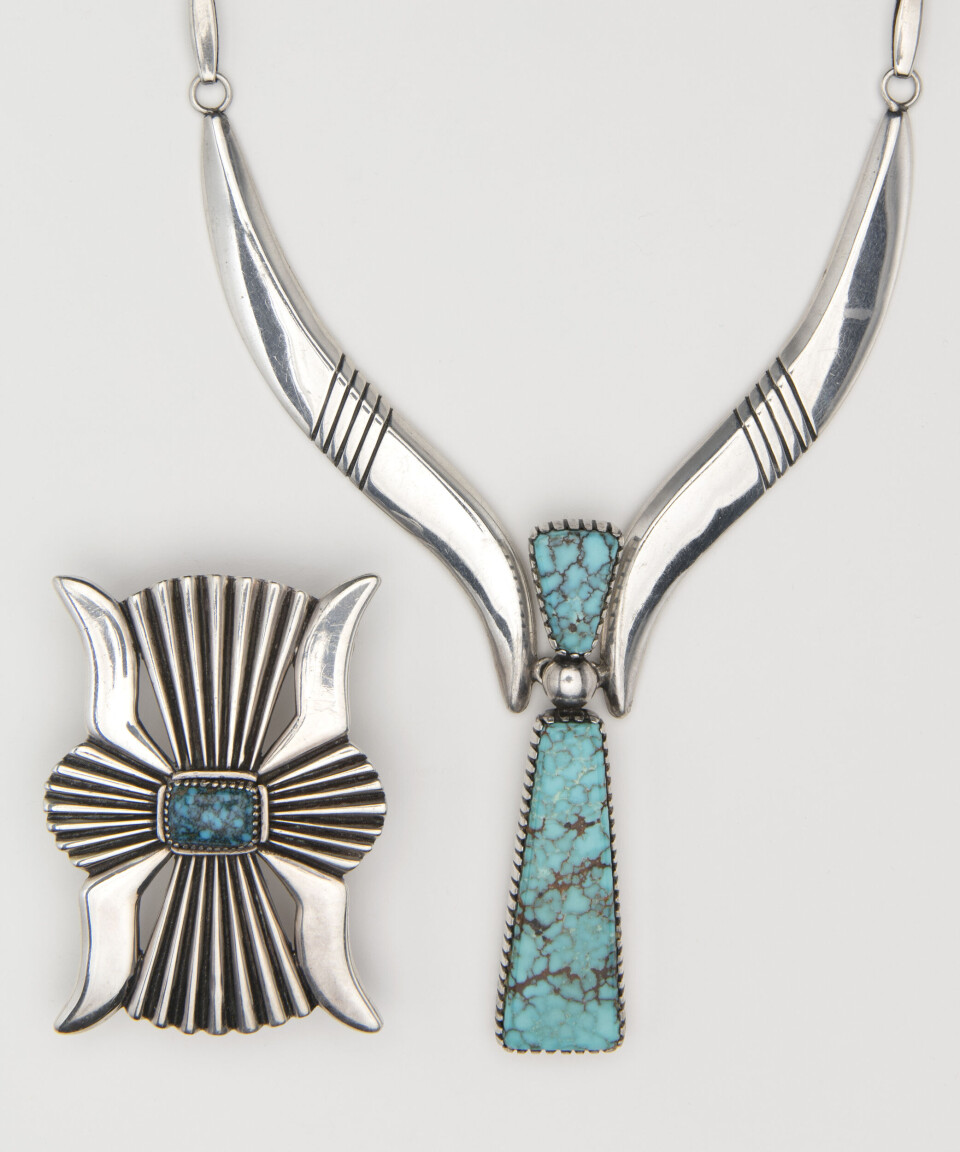
The artistry of jewelry designer and silversmith Julian Lovato (Santo Domingo Pueblo) has been recognized by collectors of Southwestern jewelry for decades. Now, eight years after his death, Lovato is receiving institutional recognition as well, in the form of his first solo museum exhibition, “Silver Honors Stone,� at the Wheelwright Museum of the American Indian in Santa Fe. The exhibition runs through Oct. 17.
“His contemporaries were very famous jewelers like Lewis Lomay, who was Hopi, Joe Quintana, who’s Cochiti, and Mark Chee, who’s Navajo,� museum director Nancy Steedman said. “We’ve certainly done shows for all of those people in the past.�
Recognizing under-appreciated jewelers is part of the museum’s mission, Steedman said. The Wheelwright is home to the Center for the Study of Southwestern Jewelry and maintains important Indigenous jewelry holdings in its collection.
“Since 2015, our permanent gallery has been (dedicated to) the history of Southwestern jewelry, and from time to time, we recognize that there are jewelers who maybe haven’t been as prominent — people like Charles Loloma (Hopi) and Fred Peshlakai (Diné) and some of the really avant-garde ones who really changed the style when they started creating their jewelry,� Steedman said.
About a year and a half ago, an anonymous Lovato collector approached the museum about doing a show.
“It was one of those things that we hadn’t ever considered, because our permanent collection only has a limited number of his pieces,� Steedman said. “So, when this gentleman approached us, the then-director (Henrietta Lidchi) and (curator) Deb (Slaney) were over the moon, because they realized that with his collection, we could really showcase the work that Julian Lovato did in silversmithing.�
The museum was able to secure additional loans from public and private collections, including the Heard Museum. All together, “Silver Honors Stone� features 80 unique pieces.
The exhibition is called “Silver Honors Stone,� because, unlike many silversmiths, Lovato tended to make his stones the stars. Steedman said this focus stemmed partly from his Santo Domingo heritage.
“The Santo Domingos were truly the lapidaries. They were the stone people — much more than the Navajos, who were really known for their silver work and would often buy stones from the Santo Domingo Pueblo people,� Steedman said.
Lovato began making jewelry after serving in World War II, and by the early 1970s, he had established his own studio in Kewa Pueblo with his wife, Marie O. Lovato, a jeweler in her own right who made most of his silver chains. Julian Lovato soon developed his own style with unique features that distinguished it from his peers.
“One of his signature things was how he raised the stones,� Steedman said. She mentioned a display case containing five rings as an example. “Each one of these stones, you can see, is elevated above the ring base itself. And that is something that was truly unique to his designs.�
“Silver Honors Stone� was curated by Slaney, the Wheelwright’s collections research associate who has authored six books on Southwestern art and culture.
“Deb is so amazing … She worked at the Heard Museum in Phoenix … and I think she was just intrigued to come up here and work primarily with jewelry again, because that’s her true love,� Steedman said.
Lovato’s work is particularly interesting, Steedman said, because it moves between contemporary and traditional approaches.
“He certainly has many really contemporary looks, but I also think, in many ways, he did more of the traditional types (of jewelry) than Charles Loloma did, for example, or Joe Quintana,� Steedman said. “… Even later on, Lovato still went back to his roots and would periodically do things that were a little more traditional.�
Whichever style he worked in, Steedman said, Lovato maintained a meticulous sense of craft.
“The craftsmanship in his pieces is unrivaled,� she said.
Logan Royce Beitmen is an arts writer for the ½ü¾àÀëÄÚÉäºÏ¼¯. He covers visual art, music, fashion, theater and more. Reach him at lbeitmen@abqjournal.com or on Instagram at .


