EDUCATION
Santa Fe and Los Alamos school districts will not use required AI reading software over student privacy concerns
APS says it will still use the program in accordance with state policy

Published
Modified
Read more about Amira
-
Amid parent backlash, APS keeps AI reading program with changes
District will limit student voice recordings and delete data more frequently
-
Amid privacy concerns, New Mexico eases rules for AI reading test
Districts can now use paper tests, their own assessments or the same program without voice recordings
-
APS surpasses 3-year reading goal but falls short in math
Underserved first and second graders show literacy progress but middle school math scores falter
-
New Mexico should come up with a plan to regulate AI use in schools, state officials say
Lawmakers debate personalized learning benefits against cheating, data privacy and cognitive concerns
-
Students read aloud. AI scores them
State-mandated testing program helps track progress but sparks concerns over inconsistent data and student frustration
Santa Fe and Los Alamos public schools have spurned a state requirement to use an artificial intelligence-based software for reading assessments when the school year begins in the coming weeks, citing student privacy concerns.
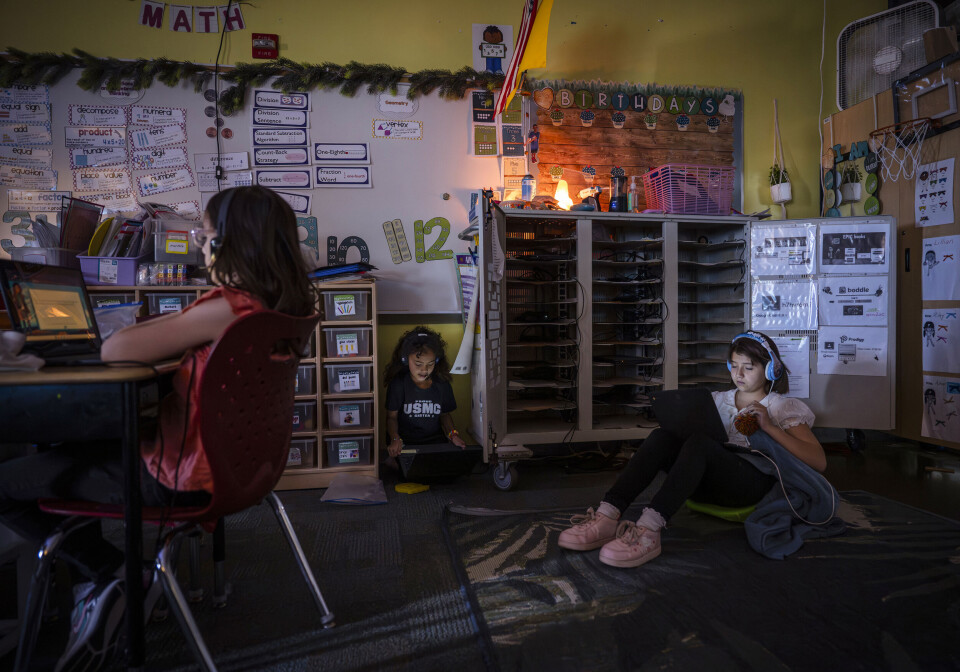
At a board meeting Thursday in Santa Fe, Santa Fe Public Schools Superintendent Christine Griffin announced that the district would be pausing use of the program, called Amira, until it received direction from the New Mexico Public Education Department on student privacy. Parents said they were concerned that the program 鈥� which works by listening to students read aloud and catching their mistakes 鈥� was saving and recording their students鈥� voices to 鈥渢rain鈥� software products for commercial purposes.
鈥淧ED is actively working with Amira to address these concerns and provide districts with additional guidance and flexibility,鈥� Griffin said. 鈥淲hile this work continues, however, Santa Fe Public Schools will refrain from using Amira, including the voice recording feature, until additional guidance is available.鈥�
If SFPS does not receive direction from the PED by Aug. 14, one week into the school year, Griffin said the district would use i-Ready, the software both SFPS and Albuquerque Public Schools use for math assessments, which does not incorporate voice recordings.
In a to PED Secretary Mariana Padilla published Sunday in the Los Alamos Daily Post, Los Alamos Public Schools Superintendent Jennifer Guy said LAPS, too, would be pausing use of Amira until security and accuracy concerns were resolved. Guy said the district would instead use the DIBELS test, a reading assessment administered by a teacher, in the interim.
鈥淥ur families are asking questions we cannot fully answer: Where are these voice recordings stored, and for how long? Who can access them?鈥� Guy wrote. 鈥淯ntil we can provide our district and families with clear, verifiable answers to these questions, we do not believe the state should require children to submit their voices to the platform.鈥�

PED spokesperson Janelle Taylor Garcia said in a statement that the department鈥檚 updated guidance on Amira use is 鈥渇orthcoming.鈥�
鈥淭his guidance will include options related to the use of Amira for student literacy assessments as well as information regarding student privacy and confidentiality of student education records,鈥� Taylor Garcia said. 鈥淪tudent safety is our priority, and we will continue to work with districts and charters to ensure that both student privacy and high-quality literacy instruction remain priorities.鈥�
APS, the state鈥檚 largest district, is among other school districts that will continue to use Amira in accordance with state requirements, APS Superintendent Gabriella Dur谩n Blakey said Monday.
鈥淲e鈥檙e just following the Public Education Department鈥檚 guidance on it,鈥� Dur谩n Blakey said.
As of the beginning of the 2025-26 school year, Amira use is mandatory for students in kindergarten through second grade at public schools and public charter schools, though its use is approved up to grade eight. The program tutors, conducts reading tests and screens students for dyslexia.
鈥淎mira, right now, is the dyslexia screener that we鈥檙e required to use,鈥� Dur谩n Blakey added.
APS has had successes using Amira for both testing and tutoring, APS Deputy Superintendent Randy Mahlerwein said.
Last school year, APS first and second graders logged their highest reading scores since at least 2021 using Amira 鈥� 34% of first grades and 38.6% of second graders were proficient in reading at the end of May.
鈥淲e know that AI is a tool, and we know that AI can benefit, but I think we also need to be responsible,鈥� Mahlerwein said.
The PED began using Amira after the software provider schools had been using for testing, Istation, was by the San Francisco-based company Amira Learning.
Amira is required for assessments in two states 鈥� New Mexico and Idaho 鈥� and is authorized for state use in Oklahoma, Georgia, California, Texas, Michigan and Massachusetts, though some New Mexico policymakers have admitted its rollout was hasty.
鈥淧ED鈥檚 deployment of Amira highlights the state鈥檚 current policy gaps,鈥� Sara铆 Ortiz, a policy analyst with the Legislative Education Study Committee, said at a committee meeting in Raton in May. 鈥淚t鈥檚 unclear what vetting process and stakeholder input PED used prior to implementation.鈥�
At that same meeting, Ortiz made a recommendation to the committee that the state adopt a statewide governance plan for the use of AI in schools. New Mexico is one of three states that passed a legislative measure to study AI in education, though the Legislature has not yet implemented a formal policy.
Sally DeRadke, the mother of an incoming second grader at APS, said she felt uneasy at the thought of her child鈥檚 voice being used to train an AI software.
鈥淢y main concern is that my child鈥檚 biometric data has been collected for a year without my knowledge or consent, and we have no idea where this data is being stored and what is being done with it,鈥� DeRadke said.
DeRadke said she hopes the district develops an option for parents to opt their children out of Amira in favor of more traditional testing methods.
鈥淎ssessment is important to catch developmental delays and any learning differences early on, so I want my child assessed,鈥� she said. 鈥淚 just don鈥檛 want them using an AI tool to assess my child.鈥�
Natalie Robbins covers education for the Journal. You can reach her at nrobbins@abqjournal.com.


