JOURNAL INVESTIGATION
Wolf trapping on the rise in New Mexico
Incidents, sometimes done to protect livestock, have led to amputations, injuries and death


Published
Modified
Their official name was the Middle Fork pack.
But to some biologists, advocates and those paying close attention to wolf recovery efforts, the Mexican gray wolves had another name: the Tripod pack.
The female alpha and male that ran the pack were each missing a leg — one having been amputated after a shooting, and the other lost to a more common cause: being caught in a leg trap.
Advocates say the pack was a “symbol of endurance and persistence� in the endangered species. Although the pack disappeared in 2014, other tripods roam.
The trapping of wolves, whether unintentional or by illegal poaching, has spiked in the past decade, alongside the related injuries, amputations and deaths.
The U.S. Fish and Wildlife Service reports that 84 wolves have been caught in private traps since 1998, the majority in New Mexico. Of those, at least five died as a result of being trapped, 11 had a leg amputated and 79 were rereleased.

According to datasets obtained from USFWS by advocacy organization Western Watersheds Project, 31 of the wolves were released with various injuries, from minor cuts to the loss of a foot, paw or multiple toes. Some of those wolves were able to release themselves from the trap and it is unclear if they are included in USFWS’ total count.
The majority of private wolf trappings happened in the past decade, and 23 have occurred since 2022, when Roxy’s Law was passed by the New Mexico Legislature banning trapping on public lands.
More recently, from January to March this year, at least nine wolves were caught in private traps, compared with five in 2025 and three in 2024. The 2026 quarterly report does not detail injuries or amputations but reported one wolf trapped needed “veterinary care.�
In April, federal agents searched two properties near Datil after two wolves were killed in traps last year, one dying of thirst and the other bludgeoned to death. Nobody has been charged in that case, and it is unclear if anyone has been formally charged for trapping wolves in other cases.
When asked about charges in any trapping cases, USFWS said: “We do not comment on active investigations.�
As the wolf population has increased, so have reports of wolves being trapped.
In February, there were at least 317 Mexican wolves in the wild, 175 in New Mexico and 142 in Arizona. The population has grown steadily since 1988, when USFWS started releasing wolves in the experimental population area across the southwestern states, bounded at the northern end by Interstate 40.

In a news release, the New Mexico Department of Game and Fish noted the recovery criteria to support downlisting the Mexican wolf was an average of 320 wolves documented annually over a four-year period.
“Although that average has not been obtained, this number does trigger the timing where a down-listing would be justified,� according to the agency, which “would add greater flexibility in implementing management actions intended to reduce conflict while continuing recovery of the subspecies to the point of delisting.�
The breeding program, part of an international effort, began in the late ’70s after the wolf was listed as endangered. It has faced steep criticism from ranchers and rural residents, mostly in west-central Catron County, who say the wolves threaten their safety and livelihoods by killing their cattle.
In addition to other measures, like having guardian dogs or using pyrotechnics, some ranchers — exempt from trapping laws and regulations — set traps to protect livestock from coyotes and other predators, but those same traps catch wolves. According to UFWS data compiled by the Western Watersheds Project, seven of the wolves caught in private traps this year were roaming Catron County at the time and three were re-released in Mexico.
Some wolves release themselves but not always without consequences. In a 2019 incident, a wolf ran off with trap on its foot and the trap was found days later with a severed paw in its jaws. In another case, a wolf was trapped by both front paws and later died of starvation due to inability to hunt, having chewed off both those feet.
Greta Anderson, deputy director of the Western Watersheds Project, said it’s still unclear what effect the injuries have on the wolves and recovery program as a whole.
“If the females are trapped during breeding season, does that mean they lose their litters? These are highly social, family oriented wolves… If one wolf leaves for three weeks to go get vet care, what's the effect of that on the pack?� she said. “There's a lot of questions that we just don't have answers to, but it feels like with an endangered species that's on such a fragile path to recovery that any of those disruptions that can be avoided should be avoided.�
Anderson said there should be no exemptions from trapping laws for protecting livestock. At worst, she said bad actors could use it as a loophole to do “their own off book management of Mexican wolves.�
The trap
It has been illegal to intentionally kill, injure or trap wolves since they were reintroduced. But there are exceptions for some, like ranchers who find wolves in the act of attacking livestock or federal agents who execute “take� orders to kill or remove problem wolves.
According to New Mexico law, fur trappers must buy a license and follow rules and regulations — including checking traps every day, not setting them within 30 feet of a carcass and carrying a device to release an unintentional capture. However, private landowners protecting livestock, domesticated animals or fowl “shall not be subject to rules and regulations on trapping … or to licensing requirements,� state law states.
Chance Thedford, president of the New Mexico Trappers Association, said fur trapping is “the most highly regulated activity a sportsperson can participate in� with laws that dictate everything from where and how traps can be set to the sizes of appropriate traps and what animals traps can be set for.
Speaking generally, he said not many trappers work solely in depredation mitigation, but “virtually all of them� do it part time, often focused on coyote protection. In 2025, over 1,300 coyotes were killed by trapping or shooting.
“There are many ways to protect livestock but the fact is that trapping is the most effective method. Nonlethal methods are a temporary solution at best,� he said.
He said accidentally trapping a wolf is uncommon: they inhabit just a quarter of the state, have low population densities and are wise to traps, having been previously caught and rereleased by the recovery program.
Thedford said he has never caught a wolf despite trapping in the recovery area since the late ’90s. He has known a few trappers who caught wolves in coyote traps and the animals were released without injury.
Trapping a wolf is prohibited by federal law “unless due care was exercised to avoid injury or death to a wolf,� according to USFWS. That includes not using neck snares, reporting the capture to the recovery program within 24 hours and using traps that allow the wolf to free itself.
The No. 1 way to avoid trapping a wolf, Thedford said, is not setting traps in wolf country.
“This is the method most effective,� Thedford said, but even trappers in wolf country can “virtually eliminate the chance� with traps that exclude canines. Those trapping coyotes can avoid places with fresh wolf sign or set traps close to the lure, as coyotes have shorter reach.
He said every case NMTA is aware of where a wolf was injured in a trap involved a trap that was illegally set, not checked or anchored as required, or the person checking the traps illegally killed the wolf.
Wolves needing treatment for trap injuries go to the ABQ BioPark Zoo.
Senior Veterinarian Dr. Carol Bradford said her first time treating a wolf for a trap injury was 14 years ago, soon after she came to the park. Then they would see maybe one a year. But, in recent years, they treat two to five wolves.
In total, she said she personally treated 10 or “potentially more� wolves for trap injuries, with wounds ranging from deep punctures to infected wounds. Often the wolf is emaciated from being left in a trap for days.
Bradford said at least six have had a leg amputated and may stay for up to 10 days to recover. She added, “it's a little bit upsetting and heartbreaking to know that this animal's going to lose a limb and it still has to find food in the wild, it still has to exist.�
But she said the animals can “bounce back quickly.�
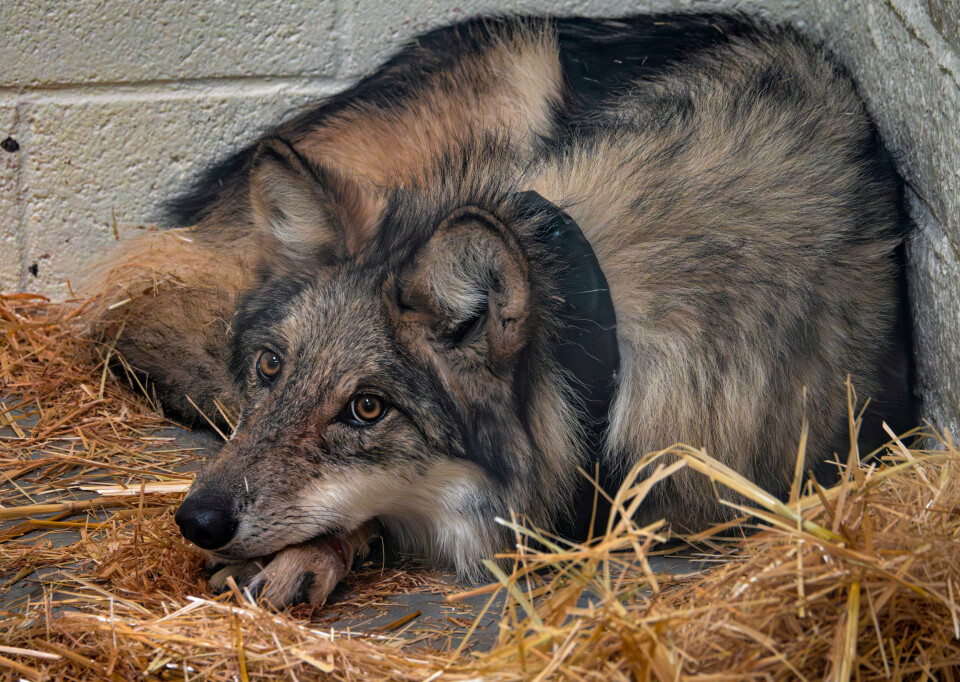
“They are able to survive and thrive in the wild, and still catch prey, and still exist, and a lot of times even go on to reproduce and have pups. … So that's just amazing to me, how resilient they are,� Bradford said, adding that they are different from the menagerie she treats regularly.
“They're definitely wild animals. You can sort of see it in their eyes that the BioPark is not home for them,� she said. “They don't want to stay here, they want to get back out there. And just seeing that kind of wildness in their demeanor is — it's just an honor to be around that.�
She recalled one wolf that came in twice for trap injuries, first in March 2025 and again in February.
The first time they treated the female wolf without major surgery, the second time they had to take her leg. Although the biologists don’t name the wolves, instead numbering them, Bradford said they named her Katie Ledecky, after the Olympic swimmer
When asked why, Bradford laughed, “Because she jumped in her water bucket repeatedly, she loved to play or mess with her water bucket.�
Sometimes, she said, the biologist will let Bradford know if a wolf is reintroduced to the pack and how it's doing. In May, a few months after Katie was released, they told her the wolf had been shot and killed.
While some cases can be upsetting, Bradford said she loves being a part of endangered species conservation, especially in her own backyard. She added, “I love the wolves, but it's the bigger picture to be part of conservation initiatives. It's amazing.�
The wolf
Audrey McQueen, a Catron County commissioner and fifth-generation rancher, said for her, wolves mean sleepless nights and tough losses.
“I've just stayed up all night trying to drive around and make noise, and hopefully try to scare them off, but you can only withstand that so long — until you just have to say ‘OK, if they die, they die,’� she said, of her livestock.
For years, McQueen has criticized the wolf recovery program, posting graphic photos to Facebook of mutilated cattle.
McQueen said she has had three horses killed, including her daughter’s mare Pickles, and loses an average of 30 cattle a year to wolves, mostly calves. McQueen, who has around 450 cattle, said state funding and reimbursement programs have helped but don’t make ranchers 100% whole.
Between January and March this year, there have been 50 confirmed cattle killed by wolves in New Mexico, according to USFW reports. In 2025, at least 125 cattle were killed and, in 2024, 80 were killed. The depredations had stayed below the triple digits since hitting a high of 122 cattle killed in 2019.
In the counties most populated by wolves, Catron, Sierra and Socorro, there were just over 113,000 head of cattle in January 2025, according to a U.S. Department of Agriculture census. The majority, 55,000, are in Catron County.
McQueen said she has tried a variety of methods to protect cattle, including trapping. She said, “I've trapped coyotes and stuff and then, inadvertently, wolves have gotten in the trap.�
McQueen called those wolf trappings “a blessing� as they deterred the wolves, which were then collared by USFWS and are now being tracked. She said trapping will “stop the killing like a light switch,� believing it disrupts the pack.
McQueen said possible consequences make trapping “a little bit scary.�
“The thing is, if you catch a wolf and it dies in the trap, and even if you're doing everything right, then you're going to be going through lawsuits and everything else,� she said.
For deterrents, McQueen said there’s no “smoking gun� but she tries to move pastures and keep livestock in tighter areas, feeding them hay when they are unable to graze. She said she believes the wolf population is “thriving� and needs to be managed “to keep the numbers at bay.�
She said, “if they don't, they're going to completely put ranchers out of business.�
McQueen said she has been encouraged by recent USFWS actions, like moving wolves south to Mexico and shooting “problem wolves� on her ranch from helicopters. She said most ranchers don’t want wolves exterminated, but they want to “still make a living.�
“For the most part, the ranchers are really good people, and I hate to see ranchers lose their livelihoods or lose permits or pay big huge fines because they've been driven crazy,� she said. “And these wolves will make you crazy, like I have to catch myself and be like ‘I've got to go to sleep, I've got to just let this go. I can't dwell on this,’ and it's sometimes super hard whenever you're watching $4,000 or $5,000 just go.�
Mary Katherine Ray, with the Rio Grande Chapter Sierra Club, also lives in wolf country — “a stone’s throw� from the Catron County line. In 2023, an uncollared wolf missing a back foot showed up on her trail camera. Ray shared the video with USFWS and the agency told her it was likely a trap injury.

“Which makes me so angry, because, I mean, wolves don't know the difference between public and private land, you know — they'd be safe on public land from that outcome,� she said. The issue hits close to home for Ray, whose dog was caught in a trap prior to the passage of Roxy’s Law — named for a dog who died from a trap in northern New Mexico.
Ray said they have tried to encourage ranchers to be proactive with wolves, such as removing carcasses from the area. She said wolves are scavengers, first and foremost, and “it's almost universal, wolves don't start killing cows until they've eaten a dead cow first.�
Ray said she has been dismayed by how political the issue has become and she doesn’t understand the hatred people have. She added, “I don't think it's everyone, I like to think it's a minority that's just very vocal.�
Ray said she has never met a wolf face to face, but they come through her yard and she sees their tracks. At night, she hears them howling and believes they belong on the landscape as much as elk, hawks and badgers.
“When I'm in that moment — hearing them howl in the hills above our house — it just, the politics go out the window, and I'm just struck with how primordial and beautiful that sound is, and it just is so wrong that humans extirpated wolves, that was a crime against nature, if you ask me,� she said.
Matt Reisen is a senior reporter with the Journal. You can reach him at mreisen@abqjournal.com or (505) 823-3563.


